Kategoriler
** Travel & Destinations European Travel

Prague Beer Culture: Best Breweries, Beer Halls & Tasting Tours

Prague Beer Culture: Best Breweries, Beer Halls & Tasting Tours

When it comes to Prague beer culture, the Czech capital isn’t just another European city with good pubs—it’s the beating heart of one of the world’s most revered brewing traditions. With Czechs consuming more beer per capita than any other nation (averaging 140 liters annually), Prague breweries and beer halls offer visitors an authentic glimpse into a centuries-old culture where beer isn’t merely a beverage, it’s a way of life.

Whether you’re a craft beer enthusiast seeking innovative microbreweries or a history buff wanting to experience traditional Czech beer in atmospheric medieval cellars, Prague’s beer scene delivers an unparalleled experience. This comprehensive guide explores the city’s legendary Prague beer halls, cutting-edge breweries, and curated tasting tours that showcase why Czech beer has earned its reputation as some of the finest in the world.

This guide is designed for beer lovers, cultural travelers, and anyone seeking to understand Prague beyond its architectural splendor through the lens of its most celebrated tradition.

Understanding Czech Beer Heritage and Tradition

Before diving into specific venues and experiences, understanding the foundations of Czech brewing culture provides essential context for your Prague beer journey.

The Pilsner Revolution: How Czech Beer Changed the World

The story of Czech beer fundamentally changed in 1842 when Bavarian brewer Josef Groll created the world’s first golden lager in the city of Plzeň (Pilsen), just 90 kilometers from Prague. This revolutionary Pilsner style—characterized by its golden color, crisp taste, and distinctive hop bitterness—became the template for approximately 70% of all beer consumed worldwide today.

Prague’s brewing heritage extends even further back, with documented brewing in the city since 993 AD. The famous Benedictine Břevnov Monastery established one of Central Europe’s oldest breweries, setting standards that influenced centuries of brewing excellence.

The Czech Approach: Quality Over Quantity Marketing

Czech brewing philosophy prioritizes traditional methods and quality ingredients. The country’s Saaz hops (Žatecký chmel) represent one of the “noble hop” varieties, prized globally for their delicate, spicy aroma. Combined with soft Bohemian water and time-honored lagering techniques, these elements create the distinctive character that defines authentic Czech lager.

The beer classification system in Czech Republic differs from international standards. Rather than measuring alcohol by volume (ABV), Czech brewers use degrees Plato (°P), which indicates the original gravity or sugar content before fermentation. A standard Czech lager typically ranges from 10-12°P, translating to approximately 4-5% ABV.

Historic Prague Beer Halls: Where Tradition Lives

Prague beer halls (pivnice in Czech) represent living museums where centuries-old traditions continue unchanged. These establishments offer more than drinks—they provide immersive cultural experiences.

U Fleků: Prague’s Oldest Operating Brewery

U Fleků stands as Prague’s oldest continuously operating brewery, established in 1499. Located in the New Town district, this sprawling complex maintains its original brewing equipment and continues producing a single beer: a 13° dark lager known for its caramel notes and slight bitterness.

The venue accommodates over 1,200 guests across eight interconnected halls, each decorated with medieval and baroque frescoes. Live brass band performances create an authentic atmosphere, though visitors should note that U Fleků caters heavily to tourists. Prices reflect this positioning, with beers costing approximately 90-120 CZK (compared to 40-60 CZK at local establishments).

Best practices for visiting: Make reservations for evening visits, arrive early to secure ground-floor seating for the full experience, and politely decline additional shots offered by servers (these incur extra charges not always clearly communicated).

U Zlatého Tygra (The Golden Tiger): Literary Legacy

This legendary pub gained international fame as the favorite haunt of Czech writer Bohumil Hrabal and the site of a historic 1994 meeting between President Václav Havel and President Bill Clinton. U Zlatého Tygra serves only Pilsner Urquell, maintaining a no-nonsense approach that epitomizes traditional Czech pub culture.

The atmosphere remains decidedly local, with regular patrons occupying reserved tables and minimal tolerance for tourist behavior. This authenticity makes it a must-visit for those seeking genuine Prague beer culture, but requires respectful conduct and basic Czech pub etiquette.

Pub etiquette essentials: Wait to be seated, order promptly when the server arrives, expect beer to be delivered automatically after finishing your current glass (place a coaster on top to signal you’re done), and always say “na zdraví” (to health) when toasting.

Lokál: Modern Take on Traditional Beer Halls

The Lokál chain represents a successful modernization of the traditional beer hall concept. Founded in 2010 by restaurateur Jindřich Chalupský, Lokál establishments serve unpasteurized Pilsner Urquell through meticulously maintained tap systems, ensuring optimal freshness and flavor.

With multiple locations across Prague (Dlouhááá, Hamburk, Palmovka), Lokál combines old-world atmosphere with contemporary service standards. The menu features classic Czech cuisine executed at higher quality levels than typical tourist-oriented restaurants, with prices remaining reasonable (beer around 45 CZK).

What makes Lokál exceptional: Staff training emphasizes proper beer service, including the Czech tradition of hladinka (foam-only pour), šnyt (cut beer with extra foam), and mlíko (milk beer with maximum foam). The tap systems are professionally cleaned and maintained, ensuring consistent quality.

Modern Prague Breweries: Craft Beer Innovation

While tradition dominates Prague’s beer landscape, a thriving craft brewing scene has emerged, offering innovative interpretations alongside classic Czech styles.

Pivovarský Dům: Experimental Brewing Pioneer

Pivovarský Dům (Brewery House) has operated since 1998 in a beautifully restored building near Charles Square. This brewery-restaurant distinguishes itself through experimental brewing, offering unusual varieties like nettle beer, coffee beer, and champagne beer alongside traditional Czech lagers.

The visible copper brewing equipment creates an engaging atmosphere, and English-speaking staff readily explain the brewing process and beer characteristics. The establishment successfully bridges traditional and modern approaches, making it accessible to international visitors while maintaining Czech brewing credibility.

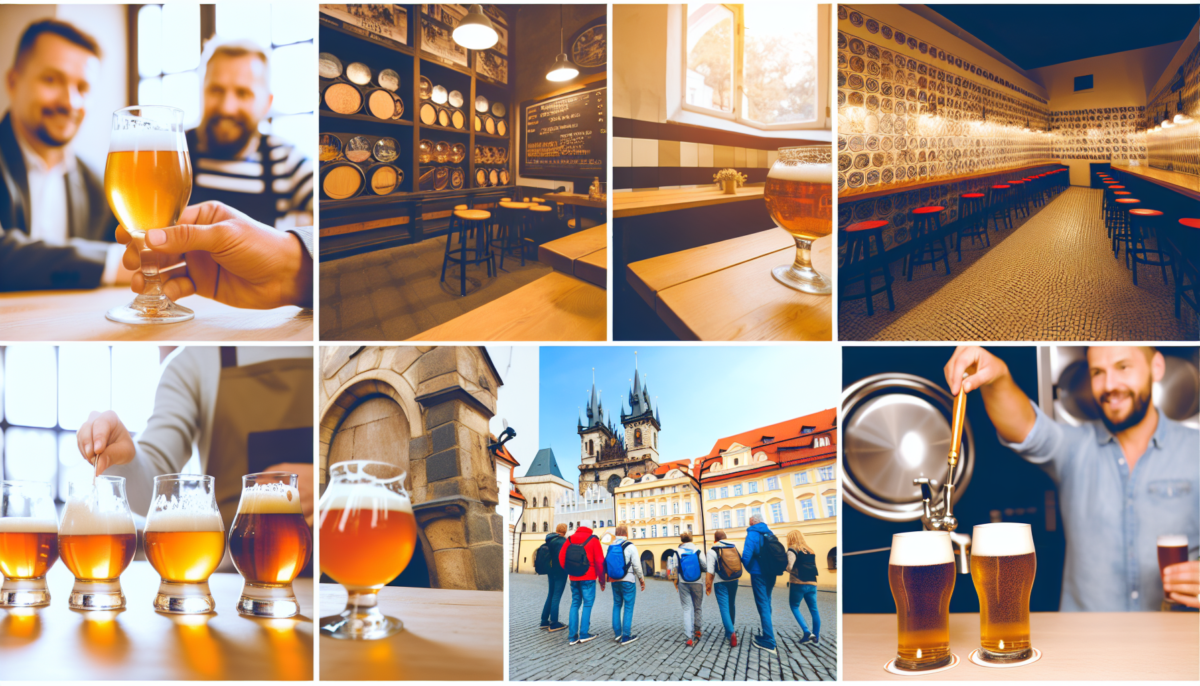
Notable offerings: The dark lager (tmavé pivo) showcases classic Czech brewing at its finest, while seasonal specialties demonstrate creative brewing techniques. Tasting flights allow sampling multiple varieties without committing to full glasses.

Únětický Pivovar: Award-Winning Village Brewery

Located in the small village of Únětice, just 30 minutes from central Prague, Únětický Pivovar has achieved cult status among Czech beer enthusiasts. This small brewery produces unpasteurized, unfiltered lagers using traditional methods and local ingredients, earning recognition as one of the country’s finest craft producers.

The brewery operates a simple restaurant serving excellent Czech food at village prices, creating an authentic experience far removed from tourist areas. The 12° pale lager represents Czech brewing excellence, with complex maltiness balanced by Saaz hop character.

Practical considerations: Únětice requires planning to reach (bus 340 from Dejvická metro station), the restaurant has limited hours (weekends and Wednesday-Friday evenings), and reservations are essential. The journey rewards committed beer enthusiasts with an unmatched authentic experience.

Matuška Brewery Tap Room: New Generation Excellence

Matuška represents the new generation of Czech craft brewing, founded in 2009 by home brewer Adam Matuška. While the main brewery operates outside Prague, the central tap room in Holešovice offers the full range of Matuška beers, including innovative IPAs, imperial stouts, and barrel-aged specialties alongside traditional Czech lagers.

The brewery has earned international recognition at competitions while maintaining deep respect for Czech brewing traditions. The tap room provides a contemporary craft beer atmosphere that appeals to international visitors while attracting local beer enthusiasts.

Why it matters: Matuška demonstrates how Czech brewing culture evolves while honoring its heritage, producing both world-class traditional lagers and experimental styles that compete globally.

Navigating Prague’s Beer Neighborhoods

Understanding Prague’s geographical beer landscape helps maximize your exploration efficiency and discover neighborhood character through local pubs.

Žižkov: The Beer District

The Žižkov neighborhood claims the highest concentration of pubs per capita in Europe, with approximately 300 establishments serving a population of 50,000 residents. This working-class district maintains authentic local atmosphere with minimal tourist presence, offering the best value and most genuine Prague beer culture experiences.

Key establishments include Bukowski’s Bar (American craft beer focus), Vinohrady Pivovar (neighborhood brewery), and countless traditional hospoda (simple Czech pubs) where beer costs 30-40 CZK and locals dominate every table.

Exploration strategy: Begin at Jiřího z Poděbrad metro station and wander the surrounding streets, stopping at any pub that looks interesting. The lack of English menus and tourist amenities ensures authentic experiences but requires adventurous spirit.

Vinohrady: Upscale Beer Scene

Vinohrady offers a more refined beer experience, with gastropubs and modern beer bars serving craft selections alongside traditional Czech brews. This residential neighborhood attracts young professionals and creative types, creating a sophisticated yet relaxed atmosphere.

Pivní Rozmanitost (Beer Diversity) operates as a bottle shop and tap room with rotating selections from Czech and international craft breweries. Vinohradský Pivovar produces its own beers in a stylish brewpub setting, combining quality brewing with contemporary design.

Old Town and Lesser Town: Tourist-Friendly Options

While these central districts cater heavily to tourism, several establishments maintain quality standards worth seeking. U Medvídků (The Little Bears) has brewed beer since 1466 and operates a small brewery producing the strong X-BEER 33 (12.6% ABV). Klášterní Pivovar Strahov (Strahov Monastery Brewery) offers spectacular views from its terrace alongside traditional monastic brewing.

Common pitfall: Many Old Town establishments charge significantly inflated prices (100-150 CZK for standard beer) and employ aggressive marketing tactics. Research specific venues before entering, and avoid establishments with staff actively soliciting customers from the street.

Prague Beer Tours: Guided Tasting Experiences

Professional Prague beer tours provide structured education, access to exclusive tastings, and cultural context that enhances appreciation beyond casual pub visits.

Prague Beer Museum Tours: Variety and Volume

The Prague Beer Museum operates multiple locations offering 30+ Czech beers on tap, making it a popular starting point for beer exploration. Their guided tours combine historical context with tasting sessions covering major Czech beer styles.

The museum concept works well for first-time visitors wanting to sample diverse offerings in a single location, though beer enthusiasts note that the “museum” designation overstates the historical content. Tours last approximately 90 minutes and include 5-6 beer samples with traditional Czech snacks.

Value proposition: Convenient introduction to Czech beer diversity without navigating multiple locations, English-speaking guides provide accessible explanations, and central locations make it easy to incorporate into sightseeing itineraries.

Prague Pub Crawls: Social Beer Experience

Various operators offer evening pub crawls visiting 3-5 traditional Prague beer halls and modern craft bars. These tours emphasize social atmosphere alongside beer education, attracting younger travelers seeking combination of cultural learning and nightlife.

Quality varies significantly between operators. Premium options like Prague Beer Tour focus on smaller groups (12-15 people), knowledgeable guides with brewing expertise, and carefully selected venues balancing traditional and contemporary options. Budget pub crawls often prioritize quantity over quality and attract party-focused crowds.

Selection criteria: Look for tours limiting group size, emphasizing beer education over drinking volume, and visiting neighborhood establishments rather than exclusively tourist-oriented venues.

Private Brewery Tours: Premium Experiences

Several Prague breweries offer private or small-group tours providing behind-the-scenes access to brewing operations, extended tastings, and opportunities to meet brewers directly.

Pilsner Urquell Brewery in Plzeň offers the most comprehensive experience, with tours including underground cellars where beer ages in oak barrels, historical exhibits, and fresh beer served directly from oak casks. The 90-minute journey from Prague is worthwhile for serious beer enthusiasts.

Únětický Pivovar offers informal brewery tours by arrangement, providing intimate access to a working craft brewery. The experience lacks polished presentation but delivers authentic insights into small-scale Czech brewing.

Czech Beer Styles: What to Drink

Understanding Czech beer categories helps navigate menus and order confidently in establishments with limited English communication.

Světlé Pivo (Pale Lager): The Classic

Světlé (pronounced “svet-leh”) refers to pale or golden lagers, representing the iconic Czech beer style. Most světlé beers range from 10-12°P, delivering balanced maltiness, moderate hop bitterness, and crisp finish.

Pilsner Urquell remains the gold standard, though many beer enthusiasts prefer smaller producers like Kout na Šumavě or Únětický for superior freshness and flavor complexity. When ordering, simply request “světlé, prosím” (pale beer, please) to receive the house lager.

Tmavé Pivo (Dark Lager): Underappreciated Excellence

Tmavé (pronounced “tma-veh”) dark lagers showcase Czech brewing versatility, offering rich malt character with notes of caramel, coffee, and chocolate while maintaining the clean, crisp finish characteristic of lager fermentation.

Unlike heavy stouts, Czech dark lagers remain highly drinkable with moderate alcohol content (typically 10-13°P). Kozel Černý represents the widely available commercial example, while craft producers like Matuška create exceptional interpretations.

Řezané (Cut Beer): Local Specialty

Řezané (pronounced “rzhe-zah-neh”) combines světlé and tmavé beers in a single glass, creating a visually striking layered effect. This traditional Czech drink offers balanced flavor complexity and represents the type of local knowledge that impresses Czech beer enthusiasts.

Order by requesting “řezané, prosím” to receive approximately 60% pale lager topped with 40% dark lager, poured skillfully to maintain distinct layers.

Special and Seasonal Offerings

Speciální beers exceed 13°P strength, offering more robust flavors and higher alcohol content. Ležák indicates beer lagered for extended periods (typically 90+ days), resulting in exceptionally smooth character.

Many breweries produce seasonal specialties: Vánoční (Christmas beer) features stronger alcohol and spice notes, while Jarní (spring beer) offers lighter, more refreshing characteristics.

Practical Tips for Prague Beer Enthusiasts

Maximizing your Prague beer experience requires understanding local customs, logistics, and insider knowledge that guidebooks often overlook.

Beer Ordering and Service Etiquette

Czech pub culture operates on unwritten rules that, when understood, create seamless experiences and earn respect from servers and locals.

Key practices:
– Servers mark beer consumption on a small paper slip at your table—never remove this, as it serves as your bill
– Fresh beer arrives automatically unless you signal completion by placing a coaster on your glass
– Tipping is expected but modest (round up or add 10-20 CZK per person)
– Servers may appear brusque—this reflects efficiency rather than rudeness
– Eye contact signals you’re ready to order; servers won’t interrupt conversations

Common mistakes to avoid: Don’t wave or call out to servers, never split bills item-by-item (divide total amount among your group), and don’t expect frequent check-ins or extensive menu explanations.

Optimal Times for Beer Hall Visits

Timing significantly impacts your experience at popular Prague beer halls and breweries.

Weekday lunches (11:30 AM – 1:30 PM) attract local workers, creating authentic atmosphere with faster service and guaranteed seating at most establishments. Many pubs offer lunch specials (polední menu) combining soup, main course, and beer at value prices.

Weekend evenings require reservations at popular venues, particularly Friday and Saturday after 6:00 PM. Tourist-oriented establishments stay busy year-round, while local pubs experience seasonal variation with summer being quietest (Czechs vacation) and winter being busiest.

Late afternoon (3:00 PM – 5:00 PM) offers the sweet spot at many venues—post-lunch crowd has departed, evening rush hasn’t begun, and you can secure prime seating while enjoying unhurried service.

Transportation and Safety Considerations

Prague’s excellent public transportation system operates until midnight, with night trams and buses continuing until regular service resumes around 5:00 AM. The metro system connects major beer neighborhoods efficiently, though some craft breweries require bus connections.

Safety note: Prague is exceptionally safe by international standards, with beer-related crime limited to tourist-targeting scams in Old Town. Standard precautions apply—watch your belongings in crowded establishments, use reputable taxi services (Uber, Bolt) or public transportation, and verify prices before ordering at unfamiliar venues.

Budgeting: Local pubs charge 35-55 CZK per beer, tourist-oriented beer halls charge 80-120 CZK, and craft beer venues charge 60-90 CZK. Daily beer budgets of 500-800 CZK (approximately $22-35 USD) allow comfortable exploration including food.

Language and Communication

While many Prague establishments employ English-speaking staff, learning basic Czech beer vocabulary enhances experiences, particularly in neighborhood pubs.

Essential phrases:
– “Pivo, prosím” (beer, please) – Standard beer order
– “Ještě jedno” (one more) – Order another round
– “Kolik to stojí?” (how much does it cost?) – Price inquiry
– “Účet, prosím” (bill, please) – Request check
– “Na zdraví” (to health) – Cheers/toast
– “Dobrou chuť” (good appetite) – Said before eating/drinking

Effort to use Czech phrases, even imperfectly, earns appreciation from servers and locals, creating more positive interactions throughout your beer journey.

Seasonal Considerations for Beer Tourism

Prague’s beer culture shifts with seasons, affecting optimal timing for visits and available experiences.

Summer Beer Gardens (May-September)

Prague’s beer gardens (pivní zahrádky) transform the city’s beer scene during warm months, offering outdoor drinking experiences in parks, castle grounds, and riverside settings.

Letná Beer Garden provides stunning views over the Vltava River and Old Town from Letná Park, serving Staropramen at reasonable prices in a relaxed atmosphere perfect for sunset sessions. Riegrovy Sady beer garden attracts younger crowds to Vinohrady’s largest park, while Vyšehrad fortress offers historical atmosphere with multiple beer garden options.

Planning tip: Beer gardens open weather-dependent (typically when temperatures consistently exceed 15°C/59°F) and close at sunset or 10:00 PM due to residential noise regulations.

Winter Beer Hall Atmosphere (October-April)

Cold weather drives locals into cozy Prague beer halls, creating peak atmospheric conditions for experiencing traditional pub culture. Wood-paneled interiors, hearty Czech cuisine, and the warmth of crowded rooms deliver authentic winter beer experiences.

Seasonal beers emerge during this period, with Christmas brews appearing in late November and strong “warming” beers throughout winter months. Many breweries host special events and tastings during this season.

Festival Opportunities

Czech Beer Festival (May) represents Central Europe’s largest beer festival, featuring 70+ Czech breweries and 400+ beers in Prague’s Exhibition Grounds. The 17-day event attracts serious beer enthusiasts alongside casual drinkers, offering comprehensive exposure to Czech brewing diversity.

Žižkov Beer Festival (September) provides a neighborhood-focused alternative, celebrating the district’s pub culture with local breweries, live music, and community atmosphere.

Beyond Prague: Day Trip Brewery Destinations

Several world-class breweries within day-trip distance complement your Prague beer exploration.

Pilsner Urquell Brewery (Plzeň)

The birthplace of pilsner lager offers comprehensive tours showcasing brewing history, traditional production methods, and underground cellars dating to the 19th century. The experience culminates with unfiltered, unpasteurized Pilsner Urquell served fresh from oak barrels—a revelation for those familiar only with exported versions.

Logistics: Direct trains depart Prague’s Main Station hourly (90-minute journey, 150-200 CZK). Tours must be booked in advance through the brewery website, with English tours offered multiple times daily.

Krušovice Brewery

The Royal Brewery of Krušovice dates to 1517 and produces one of Czech Republic’s most popular beer brands. Tours provide insights into large-scale Czech brewing and include the picturesque brewery grounds in the small town of Krušovice.

Best combined with: Visits to nearby Karlštejn Castle create a full-day excursion mixing Czech history, architecture, and brewing culture.

Velkopopovický Kozel Brewery

Kozel Brewery in Velké Popovice produces the popular Kozel brand (identifiable by the goat logo) and offers engaging tours featuring the brewery museum, production facilities, and extensive tastings. The brewery’s proximity to Prague (45 minutes) and family-friendly approach make it accessible for casual visitors.

Conclusion: Crafting Your Prague Beer Journey

Prague beer culture offers layers of experience from casual pub visits to deep dives into brewing heritage. Whether sampling Czech beer in a centuries-old hall where literary legends debated philosophy, exploring innovative Prague breweries pushing craft boundaries, or simply enjoying a perfectly poured Pilsner Urquell in a neighborhood hospoda, each experience connects you to a living tradition that defines Czech identity.

The key to maximizing your beer journey lies in balancing planned visits to iconic venues with spontaneous exploration of neighborhood establishments. Tourist-friendly beer halls provide accessibility and historical context, while local pubs deliver authentic immersion in Czech beer culture. Modern craft breweries demonstrate how tradition evolves without losing essential character.

Your action plan:

  1. Start with context: Visit Pilsner Urquell Brewery or take a guided beer tour to establish foundational knowledge
  2. Experience tradition: Schedule visits to U Fleků, U Zlatého Tygra, or similar historic beer halls
  3. Explore neighborhoods: Dedicate an afternoon to wandering Žižkov or Vinohrady, stopping at pubs that intrigue you
  4. Taste innovation: Visit at least one modern craft brewery like Matuška or Únětický
  5. Go local: End your journey in a neighborhood hospoda where tourists rarely venture

Prague’s beer scene rewards curiosity, respect for tradition, and willingness to venture beyond comfortable tourist zones. Whether you’re a dedicated beer enthusiast or casual drinker curious about Czech culture, the city’s breweries, beer halls, and pubs offer experiences that transcend simple drinking—they provide windows into a culture where beer represents art, history, and community in equal measure.

Na zdraví! (To your health!)
Kategoriler
** Travel Guides Cultural Tourism European Destinations

Prague Castle Complete Guide: Tickets, History & What Not to Miss

Prague Castle Complete Guide: Tickets, History & What Not to Miss

Standing majestically above the Vltava River, Prague Castle isn’t just a tourist attraction—it’s the world’s largest ancient castle complex and the beating heart of Czech history. Every year, nearly 2 million visitors navigate its golden lanes, Gothic spires, and baroque gardens, yet many leave having missed its most fascinating corners or spent unnecessary hours in ticket lines.

This comprehensive Prague Castle guide delivers everything you need to maximize your visit. Whether you’re a first-time traveler planning your itinerary or a history enthusiast seeking deeper insights, you’ll discover practical ticket strategies, historical context that brings the monuments to life, and insider knowledge about what truly deserves your attention within this UNESCO World Heritage site.

By the end of this guide, you’ll know exactly which Prague Castle tickets to purchase, how to avoid common pitfalls, and which hidden gems separate an ordinary visit from an extraordinary one.

Understanding Prague Castle: An Overview of the Complex

Prague Castle (Pražský hrad) encompasses 70,000 square meters of courtyards, palaces, churches, and gardens—roughly seven football fields of historical architecture spanning over 1,000 years. Founded around 880 AD, it has served as the seat of Czech kings, Holy Roman emperors, and today houses the office of the Czech Republic’s president.

The complex consists of three distinct courtyards, each with its own character and attractions. The First Courtyard features the Matthias Gate and changing of the guard ceremonies. The Second Courtyard houses the Chapel of the Holy Cross and Picture Gallery. The Third Courtyard contains the crown jewel: St. Vitus Cathedral.

What Makes Prague Castle Historically Significant

Prague Castle has witnessed every major chapter of Central European history. It’s where Bohemian kings were crowned, where the Second Defenestration of Prague sparked the Thirty Years’ War in 1618, and where Václav Havel delivered speeches during the Velvet Revolution.

The architectural timeline reads like a textbook of European styles. Romanesque foundations from the 9th century support Gothic additions from Charles IV’s reign, Renaissance modifications under the Habsburgs, and baroque renovations following the Thirty Years’ War. This layering creates a visual history lesson where each century left its architectural signature.

Prague Castle Tickets: Your Complete Purchasing Guide

Navigating Prague Castle tickets requires understanding several circuit options, each providing access to different combinations of buildings. The ticketing system can confuse first-time visitors, but selecting the right option ensures you see what matters most without overpaying.

Types of Prague Castle Tickets Available

Circuit A (350 CZK) represents the comprehensive option, including St. Vitus Cathedral, Old Royal Palace, St. George’s Basilica, Golden Lane with Daliborka Tower, and the Powder Tower. This circuit suits visitors wanting the complete experience and typically requires 3-4 hours to complete thoroughly.

Circuit B (250 CZK) offers a streamlined alternative, covering St. Vitus Cathedral, Old Royal Palace, St. George’s Basilica, and Golden Lane. This option eliminates the Powder Tower and Picture Gallery, saving approximately 90 minutes while retaining the essential highlights.

Circuit C (350 CZK) focuses on the Picture Gallery and St. Vitus Cathedral Treasury, appealing primarily to art enthusiasts and collectors interested in the castle’s artistic holdings rather than architectural elements.

Exhibition tickets provide access to special temporary exhibitions, typically priced at 150-300 CZK depending on the collection. The Story of Prague Castle permanent exhibition (Circuit D, 140 CZK) offers excellent historical context through multimedia presentations.

Where and How to Buy Prague Castle Tickets

The official ticket offices operate in the Second and Third Courtyards, though lines frequently extend 45-60 minutes during peak season (April through October) between 10 AM and 2 PM. The Second Courtyard Information Centre typically processes visitors more quickly than the Third Courtyard location.

Online advance purchase through the official Prague Castle website (www.hrad.cz) eliminates waiting times. Print your voucher or display it on your mobile device at the designated “pre-purchased tickets” entrance. This option proves especially valuable during summer months and holiday periods.

Skip-the-line tickets from authorized third-party vendors often bundle castle admission with guided tours. While these cost 15-30% more than standard admission, they include expert commentary and guaranteed entry times. Reputable providers include GetYourGuide, Viator, and local operators certified by the Czech Tourism Board.

Money-Saving Tips for Prague Castle Tickets

Children under 6 enter free regardless of circuit choice. Students under 26 with valid ISIC cards, seniors over 65, and families (2 adults + up to 5 children under 16) qualify for 50% discounts on all circuits. Always carry identification to verify eligibility.

The Prague Castle Guard Changing Ceremony occurs daily at noon in the First Courtyard and requires no ticket. Arriving at 11:45 AM secures prime viewing positions for this 20-minute ceremonial display featuring the Castle Guard and brass band.

Free entry to St. Vitus Cathedral’s nave is available outside of ticketed circuit hours. While this doesn’t include the choir, chapels, or tower, you can admire the stunning stained glass windows and Gothic architecture without purchasing tickets. Access the free area from the Third Courtyard.

Essential Areas You Cannot Miss When Visiting Prague Castle

Strategic planning ensures you experience Prague Castle’s most significant locations while avoiding decision fatigue in this sprawling complex. These essential areas represent the pinnacle of artistic, architectural, and historical achievement within the castle grounds.

St. Vitus Cathedral: The Crown Jewel

This Gothic masterpiece took 600 years to complete, from its 1344 foundation stone to the final touches in 1929. The cathedral’s soaring spires dominate Prague’s skyline, visible from nearly every vantage point in the city.

The Mucha Window in the third chapel on the north side showcases Alfons Mucha’s Art Nouveau masterwork depicting Saints Cyril and Methodius. Created in 1931, this stained glass window demonstrates how the cathedral continued evolving into the 20th century, bridging medieval foundations with modern artistic movements.

St. Wenceslas Chapel contains the tomb of Bohemia’s patron saint and walls adorned with over 1,300 semi-precious stones set into gold-plated frames. The chapel’s door leads to the Crown Chamber housing the Bohemian Crown Jewels, though this vault opens only on special state occasions.

The Great South Tower offers panoramic views after climbing 287 steps up a narrow spiral staircase. The 15th-century Sigismund Bell, weighing 18 tonnes, hangs in this tower and requires four bell-ringers to operate during important ceremonies.

Old Royal Palace: Where Kings Ruled

The Vladislav Hall represents late Gothic architecture at its zenith—a 62-meter-long ceremonial space where knights once jousted during inclement weather. The intricately vaulted ceiling, completed in 1502, creates the impression of frozen fabric draping from above.

The Riders’ Staircase features gradual steps designed to accommodate horses ascending to the Vladislav Hall for tournaments. This practical architectural solution demonstrates how medieval builders adapted spaces for specific ceremonial purposes.

Within the palace, the Story of Prague Castle exhibition uses interactive displays and archaeological finds to trace the castle’s evolution. Touchscreens, reconstructed room settings, and multimedia presentations make this area particularly engaging for younger visitors who might otherwise find the historical buildings overwhelming.

Golden Lane: Medieval Residential Quarter

This picturesque alley of colorful cottages built into the castle walls housed castle guards, goldsmiths, and later artists during the 16th century. House #22, painted robin’s egg blue, served as Franz Kafka’s writing studio during 1916-1917.

Each cottage recreates a different historical period and trade. House #12 depicts a seamstress’s workshop from the 16th century, complete with period-appropriate tools and textiles. House #14 showcases a medieval tavern, while House #26 presents a film about Golden Lane’s history.

Daliborka Tower at Golden Lane’s end functioned as a prison until the 18th century. The torture chamber exhibits, while sobering, provide authentic insight into medieval justice systems. The tower’s name honors its first prisoner, young knight Dalibor of Kozojedy, whose story inspired Bedřich Smetana’s opera “Dalibor.”

St. George’s Basilica: Romanesque Beauty

Founded in 920 AD, this basilica predates St. Vitus Cathedral by over 400 years and represents Prague’s best-preserved Romanesque church. The austere stone interior contrasts sharply with the Gothic elaboration of St. Vitus, illustrating evolving architectural philosophies.

The twin white limestone towers known as Adam and Eve mark the basilica’s distinctive baroque facade, added in the 17th century. Inside, fragments of original frescoes from the 12th century survive, offering rare glimpses of medieval painting techniques.

The adjacent Convent of St. George now houses the National Gallery’s collection of Bohemian Mannerist and Baroque art, featuring works by Karel Škréta and Petr Brandl. This collection contextualizes the artistic movements that shaped Prague Castle’s later additions.

Strategic Planning: When and How to Visit Prague Castle

Timing dramatically impacts your Prague Castle experience. Strategic scheduling minimizes crowds, optimizes lighting for photography, and aligns with special events that enhance the visit.

Best Times to Visit Prague Castle

Early morning arrival (8:00-9:00 AM when gates open) provides 90 minutes of relative tranquility before tour groups arrive. Morning light illuminates St. Vitus Cathedral’s eastern stained glass windows beautifully, and ticket lines remain minimal.

Late afternoon visits (after 3:30 PM) see declining crowds as tour groups depart. Summer evenings offer the added advantage of golden hour lighting for photography, particularly in the Third Courtyard where St. Vitus Cathedral’s western facade glows in warm tones.

Off-season months (November through March, excluding Christmas) reduce visitor numbers by 60-70%. While some gardens close and daylight hours shorten, the authentic atmosphere and ease of navigation compensate significantly. Indoor areas like the Old Royal Palace and St. George’s Basilica maintain comfortable temperatures year-round.

Tuesdays and Wednesdays typically see lower attendance than weekends or Mondays when museums throughout Prague close. Avoid Saturdays during wedding season (May through September) when St. Vitus Cathedral hosts ceremonies that temporarily limit tourist access.

Recommended Visit Duration and Itinerary

A thorough Prague Castle visit requires 3.5 to 4.5 hours for Circuit A, including time to absorb architectural details, read informational panels, and photograph key locations. Rushing through in under two hours, as some tour groups attempt, diminishes the experience significantly.

Optimal routing begins at the eastern entrance near the Powder Tower, progressing through the Royal Gardens (when open) to the Third Courtyard. Enter St. Vitus Cathedral first while energy levels remain high, as this represents the most architecturally complex building requiring sustained attention.

Proceed to the Old Royal Palace, then St. George’s Basilica before concluding at Golden Lane. This sequence follows a logical geographical flow while alternating between grand ceremonial spaces and intimate residential areas, preventing architectural fatigue.

Break opportunities exist at several cafés within the castle grounds. The Lobkowicz Palace Café offers superior coffee and pastries in a refined setting, while the café near the Toy Museum provides family-friendly options at moderate prices.

Guided Tours vs. Self-Guided Visits

Professional guided tours lasting 2-3 hours cost 800-1,200 CZK per person but provide historical context that transforms architectural features from mere buildings into narrative vessels. Skilled guides explain symbolism in St. Vitus Cathedral’s stained glass, political intrigue behind the Defenestration, and architectural decisions that reflected shifting power dynamics.

English-language tours depart multiple times daily from the First Courtyard. Private tours accommodating specific interests (architecture, political history, art) cost 3,000-5,000 CZK for groups up to 10 people, offering flexibility that group tours cannot match.

Audio guides (available at ticket offices for 350 CZK plus deposit) provide comprehensive commentary at self-directed pace. The 3-hour narration covers 45 locations with historical background, architectural analysis, and cultural context. However, audio guides cannot answer questions or adapt to individual interests.

Self-guided visits using this guide and official castle maps work well for travelers who research thoroughly beforehand. Download the official Prague Castle app (free on iOS and Android) for interactive maps, building histories, and current event schedules. This approach maximizes flexibility while minimizing costs.

Hidden Gems and Lesser-Known Areas

Beyond the primary circuit buildings, Prague Castle harbors exceptional locations that most visitors overlook. These areas offer respite from crowds while revealing fascinating aspects of castle life and Czech culture.

The Royal Gardens and Belvedere

The Royal Gardens (open April through October) showcase Renaissance landscaping at its finest. Originally designed in 1534 for Ferdinand I, these gardens feature geometric patterns, exotic plantings, and the Singing Fountain whose water creates musical tones when flowing through its bronze bowl.

The Belvedere Summer Palace, commissioned for Queen Anne Jagellonica, represents the purest Italian Renaissance architecture north of the Alps. Its arcaded galleries and copper roof oxidized to distinctive green create one of Prague’s most photographed yet least crowded landmarks.

Entry to both gardens is free and requires no castle ticket, though they’re only accessible from outside the main castle complex via U Prašného mostu street. The gardens provide exceptional views back toward St. Vitus Cathedral framed by manicured hedges and flower beds.

Lobkowicz Palace Museum

This privately-owned palace within the castle complex houses one of Central Europe’s finest private art collections. The Lobkowicz family, having reclaimed their property after communist nationalization, displays Bruegel and Canaletto paintings alongside handwritten Beethoven and Mozart scores.

The family audio guide, narrated by current family members, provides intimate perspectives on individual artworks and their historical significance to the Lobkowicz lineage. This personal approach contrasts refreshingly with institutional museum presentations.

The palace’s café terrace offers arguably the best food within the castle grounds, featuring traditional Czech cuisine with modern preparation techniques. Reservations recommended for lunch service (12:00-2:00 PM) when tables fill quickly.

South Gardens Overlooks

The South Gardens cascade down the castle’s southern slope in baroque terraces offering unparalleled views across Prague’s red rooftops toward Petřín Hill. These gardens receive a fraction of the traffic that floods the main courtyards.

The Moravian Bastion provides 180-degree panoramas while the Paradise Garden features geometric flowerbeds and sculptural elements. The Hartig Garden contains a small music pavilion where occasional chamber concerts occur during summer evenings (check castle website for schedules).

Access requires no additional ticket beyond general castle admission, yet most visitors never discover these gardens because signage from the main courtyards remains minimal. Exit the Third Courtyard through the southern passageway near the Old Royal Palace to find the garden entrances.

Common Mistakes to Avoid When Visiting Prague Castle

Even well-prepared travelers make predictable errors that compromise their castle experience. Awareness of these pitfalls enables proactive solutions.

Logistical Errors That Waste Time

Wearing inappropriate footwear ranks as the most common mistake. The castle complex involves extensive walking on cobblestones, stairs, and uneven surfaces. Fashion footwear causes discomfort within 30 minutes. Comfortable walking shoes with arch support prove essential.

Arriving without water or snacks creates problems, as food options within the complex are limited and overpriced. The nearest reasonably-priced supermarket sits 15 minutes downhill in Malá Strana. Carry a water bottle and energy bars, particularly during summer when temperatures exceed 30°C.

Ignoring security protocols causes delays. Large backpacks require checking at cloakrooms (50 CZK deposit). Security screening at major buildings prohibits outside food and drinks from entering. Plan accordingly rather than discovering restrictions at entry points.

Navigation and Planning Mistakes

Attempting too much in limited time guarantees superficial experiences. Travelers with only two hours should select Circuit B and skip the gardens rather than rushing through everything and retaining nothing. Quality trumps quantity in cultural tourism.

Following GPS directions to the “main entrance” often leads to the eastern gates requiring uphill climbs through crowds. The optimal approach for first-time visitors enters from Hradčanské náměstí (the western side) after taking tram 22 to the Pražský hrad stop.

Neglecting to check closure schedules results in disappointment. St. Vitus Cathedral closes during religious services and state ceremonies. Individual buildings maintain varying hours. Consult the official website’s “Visitor Information” section before finalizing your itinerary.

Photography Pitfalls

Photographing during midday harsh light produces washed-out images with extreme shadows. The castle’s pale stone facades and Gothic details photograph best during golden hour (one hour after sunrise or before sunset) when warm, angled light reveals architectural texture.

Ignoring photography restrictions causes confrontations with guards. Flash photography damages historical textiles and paintings, hence its prohibition in most interiors. The St. Wenceslas Chapel prohibits all photography to preserve its sacred atmosphere. Respect these rules to avoid ejection from buildings.

Missing lesser-known photo opportunities means returning home with generic shots thousands of others have captured. The view of St. Vitus Cathedral spires from Vikářská street, the Golden Lane perspective from Daliborka Tower, and the castle reflected in Wallenstein Garden pond offer unique compositions that stand out from typical tourist photos.

Practical Information for Your Prague Castle Visit

Success requires addressing practical considerations before arrival. These operational details prevent minor issues from becoming major frustrations.

Getting to Prague Castle

Tram 22 provides the most efficient public transportation, departing from multiple city center locations including Národní třída and Malostranská metro stations. Exit at Pražský hrad stop for western entrance access or Pohořelec for a scenic walk through Strahov Monastery grounds.

Walking from Malá Strana takes 15-20 minutes via the Old Castle Stairs (Staré zámecké schody) or Nerudova street. Both routes involve significant uphill climbing but pass charming baroque houses and local cafés. This approach suits morning visits when energy levels remain high.

Taxis and rideshares can drop passengers at Hradčanské náměstí, though vehicular access restrictions apply during peak hours. From this square, the castle entrance lies 100 meters east. Private drivers should use the Keplerova street approach rather than attempting to navigate the restricted zone around Pražský hrad tram stop.

Accessibility Considerations

Prague Castle presents significant mobility challenges due to its medieval origins. Cobblestone surfaces, stairs between courtyards, and narrow passages in Golden Lane create barriers for wheelchair users and those with limited mobility.

Wheelchair-accessible routes exist but require specific routing. The main entrance at Hradčanské náměstí provides elevator access to the Second and Third Courtyards. St. Vitus Cathedral, Old Royal Palace, and St. George’s Basilica offer wheelchair entry, though some interior areas remain inaccessible.

Advance notification to the Information Centre (+420 224 373 368) enables staff to prepare access routes and provide specialized assistance. Request the accessibility map showing elevator locations, ramps, and alternative routes avoiding stairs.

Facilities and Amenities

Restrooms are located in the Second Courtyard near the Information Centre, in the basement of the Old Royal Palace, and at Golden Lane’s entrance. All facilities charge 10 CZK, payable in coins (attendants cannot make change for large bills).

Luggage storage operates in the Second Courtyard Information Centre (50 CZK per item, maximum dimensions 60x40x40 cm). Large suitcases exceed size limits and must be left at commercial storage facilities in Prague’s city center before ascending to the castle.

Free WiFi covers the main courtyards though signal strength varies in interior buildings. The network name “Prague_Castle_Free_WiFi” requires no password but limits connections to 60 minutes per device.

First aid stations operate in the Information Centre during business hours. For emergencies, dial 112 (EU emergency number) or 155 (Czech ambulance service). The nearest hospital, Na Homolce, sits 3 kilometers southwest and maintains 24-hour emergency services.

Historical Context That Enriches Your Visit

Understanding key historical periods transforms architectural features from passive observation objects into active storytellers. This context enables you to read the castle’s stones like historical documents.

The Charles IV Era: Gothic Transformation

Charles IV (1316-1378) reimagined Prague as a “new Rome” and initiated St. Vitus Cathedral’s Gothic reconstruction. His architect, Matthias of Arras, then Peter Parler, pioneered innovations like flying buttresses and net vaulting visible throughout the cathedral.

The Crown Jewels commissioned during Charles IV’s reign symbolized Bohemia’s elevation to an electoral kingdom within the Holy Roman Empire. The crown’s 91 precious stones and 20 pearls represented divine authority, while its design incorporated relics of the True Cross emphasizing the kingdom’s sacred legitimacy.

Charles established the New Town of Prague, founded Charles University (Central Europe’s first), and transformed Prague Castle from a military fortress into a cultured imperial residence. His vision shaped not just architecture but Czech national identity for subsequent centuries.

The Habsburg Period: Baroque Additions

Habsburg rule (1526-1918) introduced baroque aesthetics that softened the castle’s Gothic severity. Following the 1541 fire that destroyed much of the castle, Renaissance and later baroque renovations created the architectural palimpsest visible today.

Rudolf II (1576-1612) established Prague as the Holy Roman Empire’s capital and transformed the castle into Europe’s greatest center for art, science, and occult studies. His kunstkammer (cabinet of curiosities) assembled paintings by Arcimboldo, scientific instruments, and esoteric manuscripts that attracted scholars like Tycho Brahe and Johannes Kepler.

The Thirty Years’ War (1618-1648) began at Prague Castle when Protestant nobles defenestrated Catholic governors from the Third Courtyard window of the Old Royal Palace. This event triggered three decades of devastating religious warfare across Central Europe, fundamentally reshaping the continent’s political and religious landscape.

Modern Era: Presidential Residence

Czechoslovakia’s 1918 independence transformed Prague Castle into the presidential seat, a function it maintains today. Tomáš Garrigue Masaryk, the nation’s first president, commissioned Jože Plečnik to modernize the castle while respecting its historical character.

Plečnik’s additions—the granite obelisk in the Third Courtyard, the Bull Staircase, and modifications to the gardens—demonstrate how thoughtful contemporary architecture can complement rather than compete with historical structures.

Václav Havel (president 1989-2003) opened the castle to unprecedented public access following the Velvet Revolution, transforming it from a communist government stronghold into a symbol of democratic transparency. His decision to invite artists and intellectuals into presidential service continued Rudolf II’s tradition of the castle as a cultural center.

Combining Prague Castle with Nearby Attractions

Strategic planning connects Prague Castle visits with surrounding neighborhoods and attractions, creating efficient full-day itineraries that maximize your time in this historic district.

Malá Strana (Lesser Town)

St. Nicholas Church represents Prague’s finest baroque interior, with frescoes covering 1,500 square meters of ceiling space. Located 10 minutes downhill from the castle, this church offers dramatic contrast to St. Vitus Cathedral’s Gothic verticality.

Wallenstein Garden provides free admission to baroque landscaping featuring peacocks, grottos, and a sala terrena with mythological frescoes. The garden sits 15 minutes from the castle via Nerudova street and offers peaceful respite after castle crowds.

Kampa Island below the Charles Bridge features riverside parks, the Kampa Museum of modern art, and the John Lennon Wall. This area combines naturally with castle visits when descending via the Old Castle Stairs to Malostranská metro station.

Strahov Monastery

Located 500 meters west of the castle, Strahov Monastery houses two spectacular libraries—the Theological Hall and Philosophical Hall—featuring baroque bookcases reaching toward frescoed ceilings. The monastery brewery serves traditional Czech beer with panoramic city views.

Combined tickets linking the castle and Strahov don’t exist, but geographical proximity enables efficient visits. Morning at the castle followed by lunch at Strahov Brewery and afternoon library visits creates a logical progression.

The Petřín Observation Tower (mini Eiffel Tower) stands 400 meters south of Strahov, accessible via funicular railway or walking paths. Climbing its 299 steps provides 360-degree panoramas complementing the castle’s elevated vantage points.

Nový Svět Quarter

This hidden neighborhood of baroque cottages painted in pastel hues sits immediately northwest of the castle complex yet receives minimal tourist traffic. Nový Svět street (“New World”) features tiny houses originally built for castle servants, now converted to art studios and cafés.

The Černín Palace (now Czech Foreign Ministry) dominates the area with a 150-meter-long facade, exemplifying the monumental baroque style that defined Prague’s 17th-century reconstruction. While the palace interior remains closed to tourists, the exterior demonstrates the architectural ambitions of Czech nobility.

A 10-minute walk connects the castle’s northern exit to Nový Svět, creating opportunities for lunch away from tourist-centric establishments. Local restaurants like U Černého vola serve authentic Czech cuisine at prices 30-40% below castle-area venues.

Final Recommendations and Resources

Successfully visiting Prague Castle requires balancing thorough preparation with flexibility to embrace unexpected discoveries. These final recommendations synthesize the guide’s key insights into actionable strategies.

Essential Pre-Visit Preparation

Purchase Circuit B tickets online 2-3 days before your visit unless you’re a devoted architecture enthusiast requiring the additional buildings in Circuit A. The 100 CZK savings compared to Circuit A, combined with time efficiency, makes this the optimal choice for 80% of visitors.

Download offline maps before arrival, as cellular data becomes unreliable within thick castle walls. The Maps.me app includes detailed Prague Castle layouts with building labels, working without internet connectivity.

Check the official website (www.hrad.cz) within 24 hours of your visit for closure notifications, special events, or ceremony schedules that might affect access. The “News” section provides real-time updates in English.

Making the Most of Your Time

Prioritize St. Vitus Cathedral as your first stop when fresh and attentive. Allocate 45-60 minutes to properly absorb the stained glass, examine architectural details, and climb the tower if weather permits views.

Engage with interpretive materials rather than rushing through spaces. Information panels in English provide historical context that transforms passive sightseeing into active learning. The Story of Prague Castle exhibition particularly deserves 30 minutes for its excellent multimedia presentations.

Pause periodically in courtyards to process what you’ve experienced. Cultural fatigue diminishes retention and enjoyment after 90 minutes of continuous touring. Brief breaks enhance rather than detract from the overall experience.

Photography and Documentation

Bring a fully charged camera with adequate storage capacity. The castle’s architectural details, stained glass, and panoramic views provide hundreds of worthwhile photo opportunities. A backup battery proves valuable as cold weather drains power rapidly.

Vary your compositions by including human elements for scale, shooting from low angles to emphasize Gothic height, and capturing detail shots of sculptural elements. These varied images better convey the castle’s character than standard wide-angle tourist shots.

Respect photography restrictions to avoid confrontations and preserve fragile historical materials. When photography is prohibited, purchase postcards or official publications that provide superior images while supporting castle preservation efforts.

Continuing Your Prague Castle Education

The Prague Castle website (www.hrad.cz) maintains extensive historical articles, virtual tours, and architectural analysis for post-visit learning. Their English-language section includes scholarly essays accessible to general audiences.

“Prague Castle: A Guide to the Monuments” by Jiří Blažek provides comprehensive architectural and historical analysis in English, available at castle bookshops or online retailers. This 200-page illustrated guide serves both as preparation and lasting reference.

The Prague Castle Administration YouTube channel features documentary videos on restoration projects, historical research, and architectural discoveries. These videos, many with English subtitles, reveal aspects of the castle not visible during standard visits.

Conclusion: Your Prague Castle Journey Begins

Prague Castle represents far more than a collection of historical buildings—it’s a living chronicle of European civilization compressed into 70,000 square meters. From Romanesque foundations to Gothic masterworks, Renaissance palaces to baroque gardens, every stone and archway tells stories of kings and commoners, triumph and tragedy, artistic ambition and political intrigue.

This guide has equipped you with the practical knowledge to navigate ticketing complexities, avoid common mistakes, and identify the castle’s essential and hidden treasures. You understand when to visit for optimal experiences, how to route your exploration efficiently, and why historical context transforms architectural observation into meaningful cultural engagement.

The castle’s approximately four-hour visit requires physical stamina and intellectual curiosity, but rewards both with experiences that resonate long after you’ve descended back into Prague’s cobblestoned streets. Whether you’re drawn to Mucha’s stained glass artistry, the medieval atmosphere of Golden Lane, or panoramic views from the South Gardens, Prague Castle delivers moments that photographs and postcards can only partially capture.

Begin planning your Prague Castle visit today. Review the official website for current ticket prices and opening hours, select your preferred circuit based on this guide’s recommendations, and consider advance ticket purchase to maximize your time exploring rather than queuing. The world’s largest ancient castle complex awaits your discovery—approach it informed, prepared, and ready to engage with one of humanity’s most remarkable architectural achievements.

Your journey through a millennium of Czech history starts the moment you pass through the castle gates. Make it count.

Kategoriler
** Travel Guides Czech Republic Entertainment

Prague Nightlife Guide: Best Bars, Clubs & Night Activities in 2024

Prague Nightlife Guide: Best Bars, Clubs & Night Activities in 2024

When the sun sets over Prague’s iconic spires and medieval architecture, a different side of the city awakens. The Czech capital transforms into one of Europe’s most electric nightlife destinations, where centuries-old beer halls meet cutting-edge electronic music venues, and underground clubs pulse until dawn. Whether you’re searching for sophisticated cocktail lounges with panoramic views or gritty techno warehouses that rival Berlin’s legendary scene, Prague nightlife offers an unparalleled diversity that caters to every taste and budget.

This comprehensive guide explores Prague’s vibrant after-dark scene, from the best Prague bars serving world-class Czech beer to the most electrifying Prague clubs where international DJs spin until sunrise. We’ll navigate the city’s distinct nightlife districts, reveal insider tips for avoiding tourist traps, and uncover hidden gems that locals frequent. Whether you’re planning a bachelor party, a romantic evening, or simply want to experience authentic Czech drinking culture, this guide provides everything you need to make the most of Prague night activities in 2024.

Understanding Prague’s Nightlife Districts

Prague’s nightlife scene is strategically distributed across several key districts, each offering its own distinct atmosphere and crowd. Understanding these geographical divisions helps you plan your evening efficiently and match your preferences with the right neighborhood.

Old Town (Staré Město) and Wenceslas Square

The Old Town represents Prague’s most tourist-concentrated nightlife area, centered around Wenceslas Square and the narrow streets leading to Old Town Square. This district features a high concentration of international-style bars, dance clubs, and entertainment venues designed primarily for visitors. While some establishments here inflate prices and employ aggressive promoters, legitimate venues like Karlovy Lázně (a five-floor mega-club) and Duplex (a rooftop club with stunning city views) offer memorable experiences.

Best for: First-time visitors, large groups, club-hopping, and those seeking convenience near major hotels.

Price range: Medium to high (expect to pay 150-300 CZK for cocktails, 100-200 CZK for beer)

Caution: This area has the highest concentration of tourist-targeted scams, including overpriced “gentlemen’s clubs” and bars with misleading pricing. Always check prices before ordering and avoid venues with aggressive street promoters.

Žižkov: The Underground Alternative Scene

Žižkov stands as Prague’s authentic, bohemian nightlife district—a stark contrast to the polished tourist areas. This working-class neighborhood has evolved into the city’s creative hub, featuring dive bars, underground music venues, and some of the cheapest drinks in Prague. The density of bars here is remarkable, with locals claiming Žižkov has more pubs per capita than any other district in Europe.

Key venues: Palác Akropolis (live music and club nights), Bunkr Parukářka (underground techno bunker), and countless authentic Czech pubs where beer costs as little as 30-40 CZK.

Best for: Alternative music lovers, budget-conscious travelers, meeting locals, and experiencing authentic Prague nightlife away from tourist crowds.

Atmosphere: Gritty, unpretentious, creative, and genuinely Czech. Don’t expect fancy décor—the focus here is on good drinks, great music, and authentic experiences.

Vinohrady: Sophisticated and LGBTQ+ Friendly

Vinohrady represents Prague’s upscale residential neighborhood with a thriving nightlife scene that balances sophistication with inclusivity. This district is particularly known as the center of Prague’s LGBTQ+ community, featuring numerous gay bars, clubs, and inclusive venues alongside trendy cocktail bars and wine lounges.

Notable establishments: Saints Bar (cocktail lounge), Termix (popular gay club), and numerous wine bars serving Czech and international selections.

Best for: Cocktail enthusiasts, wine lovers, LGBTQ+ travelers, and those seeking a more refined nightlife experience without Old Town’s tourist atmosphere.

Price range: Medium to high, but with better value than Old Town tourist traps.

Karlín: The Rising Star District

Once an industrial neighborhood, Karlín has undergone dramatic gentrification in recent years, emerging as Prague’s trendiest nightlife destination for locals and informed visitors. This district features innovative cocktail bars, craft beer pubs, and contemporary clubs that emphasize quality over quantity.

Must-visit venues: Cross Club (an industrial art installation that doubles as a music venue), Kasárna Karlín (a cultural center with bars and event spaces), and various craft beer establishments.

Best for: Craft beer enthusiasts, design-conscious travelers, and those seeking Prague’s contemporary creative scene.

Prague Bars: From Traditional Pubs to Rooftop Lounges

The diversity of Prague bars reflects the city’s unique position at the crossroads of tradition and modernity, where centuries-old beer culture meets contemporary mixology innovation.

Traditional Czech Beer Halls and Pubs

No Prague nightlife experience is complete without visiting authentic Czech beer halls, where the nation’s legendary brewing tradition comes alive. These establishments serve some of the world’s best beer at remarkably affordable prices, often accompanied by hearty Czech cuisine.

U Fleků stands as Prague’s most famous brewery and beer hall, operating continuously since 1499. While undeniably touristy, it offers an authentic atmosphere with house-brewed dark lager served by costumed waiters in massive medieval halls. However, be aware of pricing transparency issues and occasional pressure to order expensive shots.

Lokál represents a more contemporary take on the traditional pub concept, offering perfectly poured Pilsner Urquell in a bustling atmosphere popular with both locals and informed visitors. With multiple locations across Prague, Lokál maintains high standards while keeping prices reasonable (beer around 45-50 CZK).

U Zlatého Tygra (The Golden Tiger) achieved legendary status as Václav Havel’s favorite pub, where the former Czech president hosted Bill Clinton in 1994. This no-frills establishment serves exceptional Pilsner Urquell in an authentically local atmosphere, though service can be brusque and seating scarce during peak hours.

Best practices for Czech pubs:
– Table service is standard; never order at the bar
– Waiters mark beer consumption on a paper coaster—don’t lose it
– Signal readiness for another beer by placing your coaster on the table
– Tipping 10% is customary and appreciated
– Don’t expect extensive food menus; focus on beer and simple dishes

Craft Beer Revolution

Prague’s craft beer scene has exploded in recent years, challenging the dominance of traditional pilsners with innovative styles and experimental brewing techniques. These establishments attract a younger, more international crowd while maintaining Czech beer culture’s core values.

Pivovarský Klub pioneered Prague’s craft beer movement, offering over 100 Czech microbrewery beers on rotation. The knowledgeable staff provides excellent recommendations, and the venue successfully bridges traditional pub culture with contemporary beer enthusiasm.

BeerGeek Bar in Vinohrady represents the cutting edge of Prague’s craft beer scene, featuring Czech microbreweries alongside international selections. The industrial-modern interior attracts beer enthusiasts seeking rare brews and knowledgeable discussion.

Dva Kohouti (Two Roosters) operates both as a microbrewery and taproom, offering fresh, unpasteurized beers brewed on-site. The rotating selection showcases various styles, from traditional Czech lagers to American-influenced IPAs.

Craft beer venue characteristics:
– Higher prices than traditional pubs (80-150 CZK per beer)
– English-speaking staff with beer expertise
– Modern, design-conscious interiors
– Rotating beer selections with tasting notes
– International crowd mixed with Czech beer enthusiasts

Cocktail Bars and Speakeasies

Prague’s cocktail scene has matured dramatically, with world-class mixologists creating innovative drinks that rival offerings in New York, London, or Tokyo. These venues emphasize craft, quality ingredients, and creative presentation.

Hemingway Bar consistently ranks among the world’s best cocktail bars, named after the famous author who never actually visited Prague. The intimate space features expertly crafted classics and innovative signatures, with bartenders who take their craft seriously. Reservations are strongly recommended.

Anonymous Bar offers a prohibition-era speakeasy experience, requiring guests to ring a doorbell for entry. The theatrical atmosphere complements perfectly balanced cocktails, though prices reflect the premium experience (300-400 CZK per cocktail).

Black Angel’s Bar occupies a stunning art deco space beneath the Hotel U Prince, serving classic cocktails in an atmosphere reminiscent of 1930s glamour. The extensive menu features both timeless recipes and contemporary creations.

L’Fleur brings French sophistication to Prague’s cocktail scene, emphasizing floral and botanical ingredients in beautifully presented drinks. The elegant interior and professional service create an upscale experience without pretension.

Cocktail bar etiquette:
– Expect to pay 250-400 CZK per cocktail at quality venues
– Reservations recommended for popular establishments
– Dress code typically smart casual or better
– Take time to discuss preferences with bartenders
– Tip 10-15% for exceptional service

Rooftop Bars with Spectacular Views

Prague’s stunning architecture and hilltop geography create perfect conditions for rooftop bars offering panoramic city views alongside quality drinks.

T-Anker atop the Hilton Prague provides 360-degree views of the city, including Prague Castle, Old Town, and the Vltava River. The extensive cocktail menu complements the vista, though prices reflect the premium location.

Terasa U Zlaté Studně (Golden Well Terrace) offers the most romantic rooftop experience in Prague, perched below Prague Castle with intimate seating and exceptional views. The upscale atmosphere and pricing make this ideal for special occasions.

Cloud 9 Sky Bar & Lounge at the Hilton Prague Old Town features modern design, creative cocktails, and stunning sunset views over the city’s historic center. The DJ-driven atmosphere creates a lively vibe, especially on weekends.

Rooftop venue considerations:
– Weather-dependent operations (most open April-October)
– Higher prices than ground-level establishments
– Advance booking essential for sunset hours
– Dress codes typically enforced
– Can be crowded with tourists during peak season

Prague Clubs: Electronic Music and Dance Venues

Prague’s club scene has evolved into one of Central Europe’s most respected electronic music destinations, attracting international DJs and producing homegrown talent that performs worldwide.

Techno and Electronic Music Temples

The Czech capital’s electronic music scene draws inspiration from Berlin’s legendary club culture while developing its own distinct identity characterized by industrial spaces, marathon opening hours, and serious dedication to sound quality.

Ankali stands as Prague’s premier techno institution, occupying a former industrial space in Karlín. The club features a world-class sound system, rotating international and Czech DJs, and a crowd that takes electronic music seriously. Weekend events often run from midnight until noon the following day, with peak energy occurring around 4-6 AM.

Bassment focuses on bass music, drum and bass, and dubstep, attracting a dedicated crowd of electronic music enthusiasts. The intimate space creates an intense atmosphere, with the sound system designed specifically for bass-heavy genres.

Roxy represents Prague’s longest-running alternative club, operating since 1989 in a converted cinema. While programming varies from electronic music to live bands and experimental performances, the venue maintains its underground credibility and artistic vision.

Techno club culture essentials:
– Doors typically open midnight or later
– Peak hours run 2-6 AM
– Entry fees range 200-400 CZK
– Photography often prohibited (respect the vibe)
– Minimal talking on the dance floor (focus on music)
– Some venues operate no-photo policies

Mega Clubs and Multi-Floor Venues

For those seeking variety and large-scale production, Prague offers several multi-floor clubs featuring different music genres and atmospheres under one roof.

Karlovy Lázně claims the title of Central Europe’s largest club, occupying five floors in a historic building near Charles Bridge. Each floor features distinct music (dance, R&B, oldies, chill-out, and Czech music), creating a diverse experience that appeals to large groups with varying tastes. However, the venue’s tourist-heavy crowd and commercial music selection make it less appealing to serious music enthusiasts.

Duplex combines a rooftop location overlooking Wenceslas Square with upscale club atmosphere, attracting a well-dressed international crowd. The venue hosts both local and international DJs, with programming leaning toward commercial dance music and house.

Cross Club defies easy categorization, functioning simultaneously as an industrial art installation, music venue, and bar. The space features three floors of intricate mechanical sculptures, steampunk aesthetics, and diverse programming from techno to live bands. This venue represents Prague’s creative spirit at its finest.

Underground and Alternative Venues

Prague’s true nightlife character emerges in underground venues that prioritize music quality, community, and artistic integrity over commercial success.

Bunkr Parukářka occupies actual Cold War-era nuclear bunkers beneath Žižkov’s Parukářka park, creating one of Europe’s most unique club environments. The concrete tunnels and chambers host primarily techno and house events, with exceptional acoustics and an atmosphere that feels genuinely underground.

Fuchs2 serves as a cultural center and club space in Žižkov, featuring experimental electronic music, live performances, and art exhibitions. The venue emphasizes community over profit, with affordable entry fees and a welcoming atmosphere for both locals and visitors.

MeetFactory operates as a contemporary art center with an attached music venue and club space, founded by renowned Czech artist David Černý. The programming spans electronic music, indie rock, and experimental performances, all within an industrial setting that embodies Prague’s post-industrial creative renaissance.

Underground venue tips:
– Cash only at many venues (ATMs often unavailable)
– Dress comfortably; style matters less than authenticity
– Learn basic Czech phrases for bathroom and bar
– Respect the space and community atmosphere
– Arrive after 1 AM for peak energy

Prague Night Activities Beyond Bars and Clubs

Prague nightlife extends far beyond drinking and dancing, offering diverse activities that showcase the city’s culture, history, and contemporary creative scene after dark.

Late-Night Cultural Experiences

Prague Castle Night Tours provide a magical alternative to daytime visits, with the illuminated complex creating an atmospheric backdrop for exploring Czech history. Various tour operators offer evening programs that combine castle access with historical narratives, typically running until 10-11 PM during summer months.

Vltava River Cruises operate evening and dinner cruises showcasing Prague’s illuminated architecture from the water. These experiences range from casual boat rides with drinks to elaborate dinner cruises with live music, offering romantic alternatives to traditional nightlife activities.

National Theatre Performances allow culture enthusiasts to experience world-class opera, ballet, and drama in a stunning neo-Renaissance building. Evening performances typically begin at 7 PM, with the building itself worth visiting for its ornate interior and historical significance.

Late-Night Food Scene

Prague’s food scene has evolved dramatically, with numerous establishments now serving quality meals well past traditional dinner hours.

Lokál Dlouhá and other Lokál locations serve traditional Czech cuisine until midnight or later, providing authentic goulash, svíčková, and other national dishes when late-night cravings strike. The bustling atmosphere and efficient service make these ideal post-club dining destinations.

Manifesto Market operates as Prague’s premier food truck court, with various vendors serving international cuisine in a covered space near Florenc. Summer operations often extend past midnight, offering everything from Vietnamese pho to Mexican tacos.

24-Hour Options: Several establishments serve food around the clock, including Café Imperial (historic art nouveau café), various kebab shops in Old Town and Wenceslas Square, and McDonald’s locations for familiar options. The Nonstop convenience stores scattered throughout the city provide basic snacks and drinks at any hour.

Casino and Gaming Entertainment

Prague features numerous casinos catering to international visitors, though quality and legitimacy vary significantly. Casino Atrium and King’s Casino represent legitimate operations with proper licensing, offering table games, slot machines, and poker rooms in professional environments. Exercise caution with smaller operations and always verify licensing before gambling significant amounts.

Essential Prague Nightlife Tips and Safety Considerations

Maximizing enjoyment while minimizing risks requires understanding Prague’s specific nightlife dynamics and potential pitfalls.

Scams and Tourist Traps to Avoid

Prague’s popularity creates opportunities for unscrupulous operators targeting unsuspecting visitors. “Gentlemen’s clubs” and strip clubs represent the most notorious scams, with aggressive promoters offering “free entry” or “free drinks” before presenting victims with bills totaling thousands of dollars for champagne they didn’t order. These establishments employ intimidation and sometimes physical threats to force payment.

Overpriced tourist bars cluster around Old Town Square and Wenceslas Square, charging 3-5 times normal prices for drinks while employing attractive staff to lure customers inside. Always check drink menus for prices before ordering, and be skeptical of venues with promoters standing outside.

Taxi scams remain common, particularly late at night when public transportation stops running. Use Bolt or Uber ride-sharing apps instead of street taxis, or call reputable companies like AAA Taxi or City Taxi. Legitimate taxis display rates on doors and use meters; refuse any driver who quotes flat rates or lacks proper identification.

Currency exchange scams target intoxicated tourists, offering terrible rates with hidden fees buried in small print. Use ATMs or legitimate exchange offices during daytime, never exchanging money late at night or inside nightlife venues.

Safety and Security Best Practices

While Prague remains relatively safe compared to other major European capitals, sensible precautions reduce risks significantly:

Transportation planning: Prague’s excellent public transportation system operates until midnight, with night trams and buses running until approximately 4:30 AM when regular service resumes. Plan return routes in advance, or budget for ride-sharing services. Walking alone late at night is generally safe in central districts, though stick to well-lit main streets.

Drink safety: While drink spiking remains rare in Prague, basic precautions apply: never leave drinks unattended, watch bartenders prepare drinks, and refuse drinks from strangers. Czech beer’s strength (typically 4-5% ABV) can surprise visitors accustomed to lighter beers.

Valuables protection: Pickpocketing occurs in crowded tourist areas and on public transportation. Use front pockets for valuables, keep bags closed and visible, and avoid displaying expensive electronics, watches, or jewelry.

Emergency contacts: Czech emergency services use 112 (general emergency), 158 (police), and 155 (ambulance). Tourist police operate from a station near Old Town Square, providing English-speaking assistance for visitors.

Money and Budgeting Considerations

Prague nightlife offers exceptional value compared to Western European cities, though costs vary dramatically by venue type and location:

Budget range (per person, per night):
– Economy: 500-800 CZK ($22-35) – Local pubs, draft beer, minimal clubbing
– Mid-range: 1,000-2,000 CZK ($44-88) – Mix of bars and clubs, cocktails, club entry
– Premium: 2,500+ CZK ($110+) – Upscale venues, bottle service, fine dining

Payment methods: While card acceptance has improved, many bars and clubs still operate cash-only, particularly in alternative neighborhoods like Žižkov. ATMs are widely available, though avoid those in tourist areas charging excessive fees. The Czech Republic uses Czech crowns (CZK), not euros, despite EU membership.

Tipping culture: Standard tipping runs 10% in bars and restaurants, with rounding up acceptable for casual drinks. Club coat check typically costs 20-40 CZK, with tips appreciated but not mandatory.

Seasonal Considerations and Best Times to Visit

Prague nightlife experiences significant seasonal variation, affecting both atmosphere and available options.

Summer Season (May-September)

Summer represents peak tourist season, with maximum venue operations, rooftop bars fully open, and extended hours throughout the nightlife districts. The warm weather enables outdoor seating, beer gardens, and riverside activities that enhance the overall experience. However, tourist crowds reach maximum density, prices increase at popular venues, and authentic local atmosphere becomes harder to find in central districts.

Best for: First-time visitors, rooftop bar experiences, outdoor activities, and maximum venue selection.

Challenges: Crowded venues, higher prices, advance booking requirements, and tourist-heavy atmosphere.

Winter Season (November-March)

Winter offers a completely different Prague nightlife experience, with reduced tourist numbers creating more authentic local atmosphere. Indoor venues dominate, emphasizing cozy pubs, underground clubs, and intimate cocktail bars. Prices drop at many establishments, and locals reclaim spaces typically surrendered to summer tourists.

Best for: Electronic music enthusiasts, authentic local experiences, budget travelers, and those seeking Prague’s genuine character.

Challenges: Limited rooftop options, shorter hours at some venues, cold weather affecting outdoor activities, and reduced cultural programming.

Shoulder Seasons (April, October)

April and October provide optimal conditions for experiencing Prague nightlife, balancing pleasant weather with manageable tourist numbers. Most venues operate full schedules, prices remain reasonable, and the mix of locals and visitors creates dynamic energy without overwhelming crowds.

Special Events and Festivals

Signal Festival (October) transforms Prague into an outdoor art gallery with light installations throughout the city, accompanied by special club nights and cultural programming. Prague Pride (August) celebrates LGBTQ+ culture with parades, parties, and special events across the city. Christmas Markets (November-December) extend evening activities with mulled wine stands, food vendors, and festive atmosphere throughout Old Town and other districts.

Conclusion: Making the Most of Prague Nightlife

Prague nightlife represents a remarkable synthesis of history, culture, and contemporary creativity, offering experiences that range from centuries-old beer halls to cutting-edge electronic music venues. The city’s affordability, safety, and diversity create ideal conditions for exploration, whether you’re seeking sophisticated cocktails overlooking Prague Castle or sweaty techno sets in Cold War bunkers.

Success in navigating Prague nightlife depends on understanding the city’s geographical layout, avoiding tourist-targeted scams, and choosing venues that match your preferences and budget. The stark differences between districts—from Old Town’s international tourism focus to Žižkov’s authentic underground scene—mean that research and planning significantly enhance your experience.

Key takeaways for Prague nightlife success:

  1. Venture beyond Old Town to discover authentic venues with better value and local atmosphere
  2. Mix venue types to experience Prague’s full nightlife diversity, from traditional pubs to modern clubs
  3. Avoid aggressive promoters and verify prices before ordering to prevent scams
  4. Use ride-sharing apps for safe, reliable late-night transportation
  5. Respect local culture in traditional establishments while embracing contemporary venues’ international atmosphere
  6. Plan transportation in advance, understanding when public transit stops and resumes
  7. Budget appropriately based on venue selection, with local pubs offering exceptional value
  8. Stay safe through basic precautions while enjoying Prague’s generally secure environment

Whether you’re planning a single night out or a week-long exploration of Prague bars, clubs, and alternative venues, this guide provides the foundation for memorable experiences. The city’s nightlife scene continues evolving, with new venues opening regularly while traditional establishments maintain standards established decades or even centuries ago. This dynamic tension between innovation and tradition defines Prague’s unique position in the European nightlife landscape.

For the most current information on specific venues, events, and opening hours, consult resources like GoOut.cz (comprehensive event listings), Honest Guide (YouTube channel exposing scams and recommending legitimate venues), and Prague.tv (English-language news and entertainment coverage). Local Facebook groups and Reddit communities also provide real-time recommendations and updates from residents and experienced visitors.

Prague nightlife awaits your discovery—from the perfect pilsner in a neighborhood pub to dawn breaking over the dance floor in an underground techno club. The experiences you’ll create here offer far more than simple entertainment; they provide windows into Czech culture, connections with international travelers, and memories that justify Prague’s reputation as one of Europe’s essential nightlife destinations.

Ready to experience Prague after dark? Start planning your route through the city’s diverse nightlife districts, book reservations at premier cocktail bars, and prepare for nights that seamlessly blend centuries of brewing tradition with contemporary club culture. The lights of Prague are calling, and the city’s after-dark magic awaits your exploration.

Kategoriler
** Travel Guides European Travel Food & Drink

Complete Guide to Prague Beer Culture: Best Pubs, Breweries & Beer Tours

Complete Guide to Prague Beer Culture: Best Pubs, Breweries & Beer Tours

When you step into a traditional Czech pub in Prague, you’re not just ordering a drink—you’re participating in a cultural ritual that spans centuries. The Czech Republic holds the world record for beer consumption per capita, and Prague, its magnificent capital, serves as the epicenter of this liquid gold heritage. This comprehensive Prague beer guide will navigate you through the city’s rich brewing traditions, from historic beer halls that have served patrons since medieval times to innovative craft breweries pushing the boundaries of flavor.

Whether you’re a beer connoisseur seeking rare pilsner varieties or a curious traveler wanting to understand Czech beer culture, this guide provides everything you need to experience Prague’s beer scene like a local. You’ll discover the best pubs Prague has to offer, learn about authentic Prague brewery tours, and gain insights into the customs and etiquette that make Czech drinking culture unique.

Understanding Czech Beer Culture: More Than Just a Beverage

Czech beer culture represents a fundamental aspect of national identity. Czechs have consumed beer for over a thousand years, and their brewing expertise has influenced beer production worldwide. The original Budweiser was brewed in České Budějovice (Budweis in German), and Pilsner Urquell from Plzeň created the pilsner style that now accounts for approximately 70% of all beer produced globally.

The Cultural Significance of Beer in Czech Society

Beer holds a social function in Czech culture that transcends simple refreshment. Traditional pubs, called hospoda or pivnice, serve as community gathering spaces where locals discuss politics, celebrate life events, and maintain friendships. Unlike bars in many Western countries, Czech pubs emphasize conversation and camaraderie over loud music or entertainment.

The average Czech consumes approximately 140 liters of beer annually—nearly double the consumption rate of Germany. This statistic reflects not excessive drinking but rather beer’s integration into daily life. Czechs commonly enjoy a beer with lunch, after work, or during weekend gatherings with friends and family.

Czech Beer Terminology and Ordering Etiquette

Before exploring Prague’s beer scene, understanding basic terminology enhances your experience. Czech beer is measured in degrees (stupně), which indicates the original gravity or sugar content before fermentation—not alcohol percentage. A 10° beer contains approximately 4% alcohol, while a 12° beer typically has around 5% alcohol content.

When ordering, remember these essential customs:

  • Never toast before everyone has their beer and never make eye contact during the toast—this superstition supposedly brings bad luck
  • Place a coaster over your glass when you need a break but aren’t finished drinking
  • Pay attention to the mark on your coaster—servers track your consumption by marking small paper coasters
  • Order by saying “jedno pivo, prosím” (one beer, please) or specify the degree if you have a preference

Best Pubs Prague: Traditional Beer Halls and Historic Establishments

Prague’s traditional pubs provide authentic experiences that modern establishments cannot replicate. These venues have maintained their character through decades or even centuries, offering a glimpse into genuine Czech beer culture.

U Fleků: Prague’s Oldest Brewery and Beer Hall

Operating continuously since 1499, U Fleků represents Prague’s most famous historic brewery and beer hall. This establishment produces only one beer—a 13° dark lager with a distinctive caramel and coffee profile. The massive complex features multiple halls decorated with medieval-style frescoes and can accommodate over 1,200 guests.

What makes U Fleků special: The brewery maintains traditional production methods, brewing approximately 6,000 hectoliters annually in their on-site brewery. The beer never leaves the premises, making it unavailable anywhere else in the world.

Practical considerations: U Fleků caters heavily to tourists, which means higher prices and occasional aggressive upselling of herb liqueur shots. Visit during off-peak hours (weekday afternoons) for a more authentic atmosphere.

U Zlatého Tygra: Where Locals and Presidents Drink

Located in Old Town, U Zlatého Tygra (The Golden Tiger) earned its reputation as writer Bohumil Hrabal’s favorite pub and the place where President Václav Havel brought Bill Clinton in 1994. This no-frills establishment exemplifies traditional Czech pub culture—minimal decoration, shared tables, and exceptional Pilsner Urquell served in perfect condition.

Key features: The pub maintains strict traditional service—servers automatically bring fresh beers when you’re running low unless you’ve placed a coaster over your glass. The atmosphere remains authentically local despite its fame, with regular patrons occupying reserved tables.

Insider tip: Arrive early (by 6 PM) or expect to wait for a table. The pub’s popularity among both locals and informed tourists means limited seating availability.

Lokál: Modern Take on Traditional Czech Pubs

The Lokál chain revolutionized Prague’s beer scene by combining traditional pub culture with modern cleanliness and efficiency. Founded by beer expert Lukáš Svoboda and chef Tomáš Karpíšek, Lokál pubs serve Pilsner Urquell from tank systems that preserve optimal freshness and temperature.

Multiple locations include:
– Lokál Dlouhááá (Old Town)
– Lokál U Bílé kuželky (Malá Strana)
– Lokál Hamburk (Karlín)

Why Lokál matters: These establishments demonstrate that traditional doesn’t mean outdated. Impeccably clean facilities, English-speaking staff, and consistent quality make Lokál ideal for first-time visitors while maintaining authenticity that locals appreciate.

U Kunštátů: Hidden Gem in Lesser Town

This lesser-known pub in Malá Strana offers an intimate setting with exceptional beer quality. U Kunštátů features a small, cave-like interior with medieval architecture and serves multiple Pilsner Urquell varieties, including unfiltered versions.

Special characteristics: The pub’s limited seating (approximately 30 people) creates an intimate atmosphere. The staff takes beer service seriously, maintaining proper temperature and foam consistency for every pour.

Prague Brewery Tours: Exploring Beer at Its Source

Understanding Prague’s beer culture requires visiting where beer is actually produced. Prague brewery tours range from industrial-scale operations to intimate craft establishments, each offering unique perspectives on Czech brewing traditions.

Pilsner Urquell Brewery Experience

While technically located in Plzeň (45 minutes from Prague), the Pilsner Urquell Brewery represents an essential pilgrimage for serious beer enthusiasts. This brewery created the world’s first golden lager in 1842, fundamentally changing beer forever.

Tour highlights:
Historical brewing cellars: Nine kilometers of underground tunnels where beer is still lagered in oak barrels
Original well water source: Visitors can taste the incredibly soft water that makes Pilsner Urquell distinctive
Unfiltered beer tasting: Sample beer directly from oak lagering barrels—unavailable anywhere else
Modern production facilities: Witness state-of-the-art brewing technology producing over 9 million hectoliters annually

Booking considerations: Reserve tours several weeks in advance, especially during peak season (April-October). Multiple tour options exist, from basic 90-minute experiences to comprehensive three-hour explorations including lunch.

Staropramen Brewery Tour

Prague’s largest brewery, Staropramen, offers convenient city-center tours of their Smíchov facility. Founded in 1869, Staropramen represents traditional Czech brewing at commercial scale.

Tour experience includes:
– Interactive exhibits explaining brewing processes
– Historical displays documenting Czech beer culture
– Production facility observation areas
– Tasting sessions with multiple Staropramen varieties
– The unique “beer spa” experience (separate booking)

Practical information: Tours run daily with English-language options. The location’s accessibility via metro (Anděl station) makes it convenient for visitors staying anywhere in Prague.

Prague Craft Beer Tours: Sampling the New Wave

Prague’s craft beer revolution has created numerous small breweries producing innovative styles while respecting Czech traditions. Guided craft beer tours provide curated experiences visiting multiple establishments in single evenings.

Recommended tour operators:

Prague Beer Museum Tours: Despite the name, these aren’t museum visits but rather guided crawls to multiple craft beer establishments. Knowledgeable guides explain Czech beer culture while facilitating tastings at 3-4 different venues.

Taste of Prague Beer Tours: These experiences combine beer education with food pairing, visiting traditional pubs and modern craft breweries while sampling Czech cuisine.

Bike and Beer Tour: Combines sightseeing with beer tasting, cycling between different neighborhoods to visit various pubs and breweries.

Tour advantages: Professional guides navigate language barriers, provide cultural context, secure seating at popular establishments, and often access special tastings unavailable to individual visitors.

Emerging Craft Beer Scene: Innovation Meets Tradition

While traditional Czech brewing focuses on perfecting pilsner and dark lagers, Prague’s craft beer movement has embraced international styles while maintaining respect for local traditions.

Notable Prague Craft Breweries

Vinohradský Pivovar (Vinohrady Brewery): This neighborhood brewery in the Vinohrady district produces small batches of innovative beers alongside traditional Czech styles. Their restaurant features excellent food pairings and regularly rotating taps.

Únětický Pivovar: Located just outside Prague, this small brewery has achieved cult status among Czech beer enthusiasts. Their 10° and 12° pilsners represent textbook examples of traditional Czech brewing executed with exceptional skill.

Brew Pub U Dobřenských: This microbrewery near Prague Castle produces creative seasonal beers while maintaining Czech brewing fundamentals. The pub’s intimate setting and knowledgeable staff create ideal environments for beer education.

Pivovarský Dům (Brew Pub House): Famous for experimental flavors including coffee, banana, and nettle beers. While unconventional by Czech standards, the brewery demonstrates technical brewing skill and creativity.

Best Beer Bars for Variety

If sampling multiple breweries appeals more than visiting individual establishments, several beer bars offer extensive selections:

Zlý Časy: This Nusle neighborhood bar features 30+ taps from Czech and international craft breweries. The knowledgeable staff provides expert recommendations, and the bottle selection includes rare vintage beers.

BeerGeek Bar: Specializing in contemporary craft beer from Czech and international producers, this bar attracts serious beer enthusiasts. Regular tap takeovers and special releases provide opportunities to sample rare beers.

Prague Beer Museum (Multiple Locations): Despite tourist-oriented marketing, these bars offer impressive selections of 30+ Czech beers on tap, providing convenient sampling opportunities.

Practical Guide to Prague Beer Tours and Pub Visits

Maximizing your Prague beer experience requires strategic planning and understanding practical considerations.

Optimal Timing for Beer Tourism

Best months: May-June and September-October offer pleasant weather without peak summer crowds. Beer gardens operate fully, and popular pubs remain accessible.

Worst period: July-August brings intense tourism, making reservations essential at top establishments. December-February features excellent Christmas markets with mulled beer but limited beer garden access.

Day-of-week considerations: Visit traditional pubs on weekdays when locals dominate. Weekend evenings attract more tourists and require earlier arrival for seating.

Budget Planning

Prague offers exceptional value compared to Western European cities, but costs vary significantly:

Traditional pubs: 40-60 CZK ($1.80-$2.70) per 0.5L beer
Tourist-focused establishments: 80-120 CZK ($3.60-$5.40) per 0.5L beer
Craft beer bars: 60-100 CZK ($2.70-$4.50) per 0.33L pour
Guided brewery tours: 400-800 CZK ($18-$36) per person
Comprehensive beer tours: 1,000-2,000 CZK ($45-$90) per person

Money-saving strategies: Purchase a Prague Card for public transportation, enabling easy brewery access across the city. Many establishments offer lunch specials pairing food with beer at reduced prices.

Navigation and Transportation

Prague’s compact center makes many pubs walkable, but brewery tours often require public transportation. The city’s metro, tram, and bus system is efficient and inexpensive.

Essential transport tips:
– Purchase a 24-hour or 3-day travel pass for unlimited travel
– Download the PID Lítačka app for route planning
– Major brewery districts: Smíchov (Staropramen), Holešovice (craft breweries), Žižkov (pub neighborhood)
– Designated driver services called Řízený řidič provide affordable alternatives to taxis

Safety and Responsible Consumption

Czech beer’s relatively low alcohol content (typically 4-5%) and food-focused pub culture encourage responsible consumption. However, exercise standard precautions:

Avoid common pitfalls:
Automatic rounds: Servers may bring fresh beers without asking—use the coaster signal when done
Tourist traps: Extremely cheap beer deals often indicate lower quality or hidden charges
Unlicensed “beer bikes”: These party vehicles face increasing restrictions and fines
Dehydration: Drink water between beers, especially during summer months

Understanding Czech Beer Styles and Varieties

Appreciating Prague beer culture requires recognizing distinctions between Czech beer styles and understanding what makes them unique.

Traditional Czech Beer Styles

Světlé (Pale Lager/Pilsner): The most common Czech beer style, characterized by golden color, moderate hop bitterness, and soft, slightly sweet malt character. Czech pilsners differ from German versions through softer water, Saaz hop varieties, and decoction mashing techniques.

Tmavé (Dark Lager): Czech dark beers aren’t porters or stouts but rather dark lagers with caramel, bread, and subtle roasted flavors. They remain surprisingly light-bodied and refreshing despite their appearance.

Polotmavé (Amber/Semi-Dark): Less common style occupying the middle ground between pale and dark lagers, offering balanced malt sweetness with moderate hop character.

Řezané (Mixed/Cut): A blend of světlé and tmavé in varying proportions. While sometimes dismissed by purists, many locals regularly order this combination.

What Makes Czech Beer Distinctive

Several factors contribute to Czech beer’s unique character:

Saaz hops (Žatec hops): Indigenous Czech hops provide distinctive spicy, floral, and earthy characteristics impossible to replicate with other varieties.

Soft water: Czech brewing water contains minimal minerals, creating smooth, delicate beer profiles rather than assertive bitterness.

Decoction mashing: Traditional Czech brewing removes portions of mash, boils them separately, then returns them to the main mash. This labor-intensive process creates complex malt flavors and enhanced body.

Extended lagering: Czech breweries traditionally lager beers for 30-90 days, creating exceptional smoothness and stability.

Low carbonation: Czech beer features lower carbonation than American or German equivalents, emphasizing flavor over effervescence.

Common Mistakes to Avoid in Prague’s Beer Scene

Even experienced travelers make errors that diminish their Prague beer experience. Avoid these common pitfalls:

Tourist Trap Establishments

Wenceslas Square pubs: While convenient, most establishments here cater exclusively to tourists with inflated prices and mediocre beer quality. Walk five minutes in any direction for dramatically better value and authenticity.

Beer bike tours: These mobile party vehicles have become controversial, facing restrictions and fines. They prioritize drinking volume over cultural experience and often serve low-quality beer.

Automatic shots: Some tourist-focused pubs aggressively push Becherovka or other herb liqueur shots. You’re not obligated to accept or pay for unrequested items.

Cultural Faux Pas

Toasting incorrectly: Never clink glasses at eye level while maintaining eye contact—the superstition suggests seven years of bad luck (or bad sex, depending on the version).

Ignoring coaster signals: Not understanding the coaster system leads to unwanted beers or delays in service. Study these customs before visiting traditional pubs.

Expecting craft beer variety in traditional pubs: Classic Czech pubs typically serve 1-2 beer types from a single brewery. Visit dedicated craft beer bars for variety.

Comparing Czech beer to German beer: While both countries excel at lagers, their approaches differ significantly. Avoid declaring German superiority—Czechs take pride in their brewing heritage.

Practical Mistakes

Visiting major breweries without reservations: Popular brewery tours, especially Pilsner Urquell, sell out weeks in advance during peak season.

Underestimating pub closing times: Traditional pubs often close by 11 PM on weekdays and midnight on weekends—earlier than visitors from countries with later drinking cultures might expect.

Forgetting cash: While card acceptance has increased, many traditional pubs remain cash-only. Always carry sufficient Czech crowns.

Seasonal Beer Experiences and Special Events

Prague’s beer culture shifts throughout the year, with seasonal offerings and events providing unique experiences.

Beer Gardens (Letní Zahrady)

From April through September, Prague’s beer gardens offer quintessential summer experiences. These outdoor establishments range from simple pubs with exterior seating to massive parks accommodating thousands.

Top beer gardens:

Letná Beer Garden: Overlooking the Vltava River with stunning city views, this massive beer garden features multiple food stands and beer vendors. The sunset views are particularly spectacular.

Riegrovy Sady: Popular with locals, this Vinohrady park beer garden offers a more authentic neighborhood atmosphere with reasonable prices.

Petřínské Terasy: Elevated gardens near Petřín Tower providing panoramic views and romantic ambiance.

Beer garden etiquette: Order at the counter, bus your own tables, and expect communal seating during busy periods.

Czech Beer Festivals

Czech Beer Festival (Český Pivní Festival): Held annually in May at Výstaviště Prague, this 17-day festival features over 120 Czech breweries and 600+ beer varieties. It’s the world’s largest consumer beer festival by quantity of available brands.

Prague Beer Week: February event featuring tap takeovers, brewery collaborations, and special releases across multiple venues.

St. Martin’s Day (November 11): Traditional celebration featuring young wine and special November beers, particularly at monastery breweries.

Microbreweries Festival: Autumn event showcasing Czech craft breweries, typically held at Prague’s Exhibition Grounds.

Seasonal Beer Varieties

Jarní Speciál (Spring Special): Lighter, more refreshing beers released in March-April
Vánoční Pivo (Christmas Beer): Stronger, spicier beers available November-December
Svatomartin (St. Martin’s Beer): Special November releases coinciding with wine harvest celebrations
Velikonoční (Easter Beer): Special springtime releases with enhanced hop character

Beyond Prague: Day Trip Brewery Destinations

While Prague offers extensive beer experiences, several nearby destinations provide compelling day trip opportunities.

Plzeň (Pilsen)

Distance: 90 kilometers (45 minutes by train)

Beyond the essential Pilsner Urquell experience, Plzeň offers additional attractions:
Brewery Museum: Comprehensive exhibits documenting brewing history
Underground Plzeň: Medieval cellars and tunnels beneath the historic center
Gambrinus Brewery: Sister brewery to Pilsner Urquell with separate tours

České Budějovice (Budweis)

Distance: 150 kilometers (2-2.5 hours by train)

Home to the original Budweiser beer (Budvar), this southern Bohemian city offers:
Budvar Brewery Tour: Extensive facilities producing the Czech Budweiser
Historic town square: One of Europe’s largest medieval squares
Traditional South Bohemian cuisine: Regional specialties perfectly paired with local beer

Kutná Hora

Distance: 80 kilometers (1 hour by train)

While primarily known for the Sedlec Ossuary, this UNESCO World Heritage town features:
Dačický Brewery: Small historic brewery producing traditional beer styles
Gothic architecture: Including the spectacular St. Barbara’s Cathedral
Medieval silver mining history: Museums documenting the town’s wealthy past

Resources for Further Learning

Deepening your understanding of Czech beer culture extends beyond pub visits and tours.

Recommended Books

  • “Good Beer Guide Prague and the Czech Republic” by Evan Rail: Comprehensive guide to Czech beer culture and establishments
  • “Prague Pubs and Microbreweries” by Will Hawkes: Detailed coverage of Prague’s beer scene
  • “The Brewmaster’s Table” by Garrett Oliver: Includes extensive Czech beer information and food pairing guidance

Online Resources

BeerPulse.cz: Czech craft beer news and reviews (primarily Czech language)
PivníFilozof.com (Beer Philosopher): Insightful English-language blog about Czech beer culture
Untappd: Social beer rating platform useful for tracking Prague beers and finding highly-rated establishments

Czech Language Beer Terms

Learning basic beer vocabulary enhances pub experiences:
Pivo (PEE-vo): Beer
Malé/Velké pivo (MAH-leh/VEL-keh): Small (0.3L)/Large (0.5L) beer
Desítka/Dvanáctka (DEH-seet-kah/DVAH-nahts-kah): 10°/12° beer
Točené pivo (TOH-cheh-neh): Draft beer
Lahvové pivo (LAH-voh-veh): Bottled beer
Ještě jedno (YESH-tyeh YED-noh): One more

Conclusion: Embracing Prague’s Liquid Heritage

Prague’s beer culture represents far more than simple consumption—it embodies centuries of tradition, technical excellence, and social connection. From medieval beer halls serving pilsner perfected over generations to innovative craft breweries pushing creative boundaries, the city offers experiences for every beer enthusiast.

The best Prague beer guide strategy combines traditional establishments with contemporary craft experiences, brewery tours with spontaneous pub discoveries, and planned itineraries with serendipitous encounters. Remember that Czech beer culture emphasizes quality over quantity, conversation over inebriation, and respect for tradition over novelty.

Whether you’re sampling tank Pilsner Urquell at a Lokál, exploring underground cellars at the Pilsner Urquell Brewery, or discovering a neighborhood hospoda where you’re the only tourist, you’re participating in a living tradition that defines Czech identity. The best pubs Prague offers aren’t always the most famous—sometimes they’re the unassuming establishments where locals gather after work, where servers know regular customers by name, and where beer quality speaks louder than marketing.

Ready to explore Prague’s beer culture? Start by booking a comprehensive Prague brewery tour to understand the foundations, then venture into traditional pubs to experience authentic Czech hospitality. Download a transit app, learn basic Czech beer terminology, and approach each establishment with curiosity and respect. Your journey through Prague’s beer culture begins with a simple phrase: “Jedno pivo, prosím”—one beer, please.