
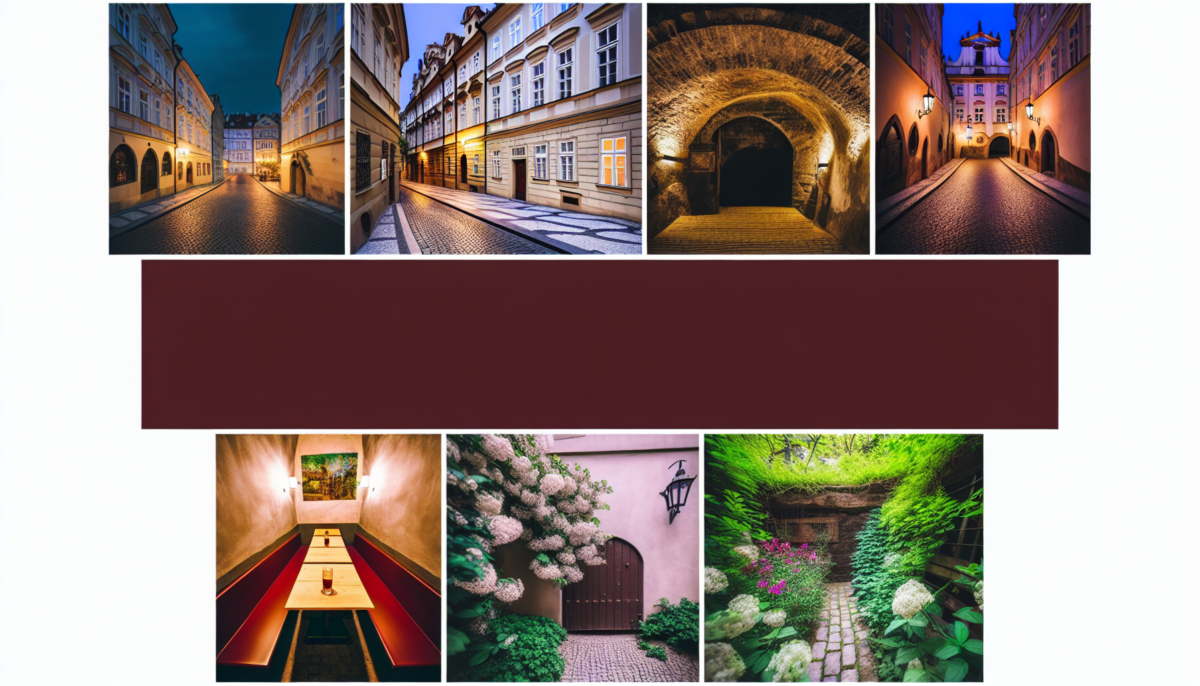
15 Hidden Gems in Prague: Secret Spots Tourists Never Find
Prague’s iconic Charles Bridge and Old Town Square captivate millions of visitors annually, but beyond these celebrated landmarks lies a different city entirely. While tourists crowd around the Astronomical Clock, locals slip into underground wine cellars, secret gardens, and centuries-old establishments that remain blissfully undiscovered. These prague hidden gems represent the authentic soul of the city—places where history whispers rather than shouts, and where you’ll find yourself genuinely alone with Prague’s remarkable heritage.
This comprehensive guide reveals secret Prague locations that even seasoned travelers miss. From abandoned railway stations transformed into cultural venues to medieval gardens hidden behind unmarked doors, these off beaten path Prague destinations offer something far more valuable than another tourist snapshot: genuine connection with one of Europe’s most enchanting capitals. Each location has been carefully selected based on its historical significance, cultural authenticity, and relative obscurity among international visitors.
Whether you’re a first-time visitor seeking authentic experiences or a returning traveler looking to dig deeper, these prague secrets will transform your understanding of the Czech capital. Let’s explore the hidden side of Prague that guidebooks rarely mention.
1. Vyšehrad Cemetery and Casemates
While tourists flock to the Old Town, Vyšehrad offers a serene alternative with profound historical significance. This ancient fortress complex houses a cemetery where Czech luminaries rest, including composers Antonín Dvořák and Bedřich Smetana, and Art Nouveau artist Alfons Mucha. The sculptural monuments here represent some of the finest examples of Czech funerary art, with elaborate headstones that tell stories of the nation’s cultural renaissance.
Beyond the cemetery, the underground casemates remain one of Prague’s best-kept secrets. These Baroque-era tunnels stretch beneath the fortress, originally designed for military defense and food storage. During your visit, you’ll encounter the original statues from Charles Bridge, protected here from environmental damage. The echo chamber within the casemates produces remarkable acoustic effects—locals claim a whisper can be heard from 40 meters away.
Practical tip: Visit during weekday mornings for an almost private experience. The fortress walls provide stunning panoramic views of Prague without the crowds at Prague Castle. Entry to the casemates costs approximately 60 CZK ($2.70), and guided tours reveal fascinating details about Prague’s military history that most visitors never discover.
The Vyšehrad gardens surrounding the fortress bloom spectacularly in spring, offering peaceful walking paths where you’ll encounter more locals than tourists. This represents authentic Prague—contemplative, beautiful, and refreshingly uncrowded.
2. Speculum Alchemiae: The Hidden Alchemist’s Laboratory
Tucked beneath a 16th-century house in Old Town lies an authentic alchemical laboratory that remained sealed and forgotten for over 200 years. Speculum Alchemiae was rediscovered accidentally during renovations in 2002, revealing preserved alchemical equipment, secret passages, and chambers where Rudolf II’s court alchemists once attempted to transform lead into gold.
This underground network connects to Prague’s legendary alchemical history. Emperor Rudolf II invited Europe’s greatest minds to Prague, creating a golden age of mystical and scientific experimentation. The laboratory features original furnaces, distillation equipment, and manuscripts that document Renaissance-era chemical processes. Your guide—often a historian specializing in alchemical traditions—explains how these “magicians” were actually early chemists whose work laid foundations for modern science.
The tour reveals secret escape routes that alchemists used when experiments went wrong or when they needed to flee persecution. These tunnels connected various houses in Old Town, creating an underground network that few modern Praguers even know exists. The cramped, atmospheric spaces transport you directly to Prague’s mystical past.
Booking essential: This attraction operates by appointment only, with tours limited to small groups of 4-8 people. Contact them several days in advance through their website. Tours run approximately 50 minutes and cost 400 CZK ($18) per person. The entrance is intentionally unmarked—you’ll receive specific instructions upon booking.
3. Riegrovy Sady Beer Garden
Locals guard this elevated beer garden fiercely, though its secret status is gradually fading among savvy travelers. Riegrovy Sady sits atop a hill in Vinohrady district, offering spectacular castle views that rival those from tourist-packed observation decks—except here, you’ll enjoy them with a half-liter of excellent Czech beer for under $2.
This sprawling park becomes Prague’s living room during warm months. Families picnic on the lawns, friends gather around communal tables, and the beer garden’s relaxed atmosphere represents authentic Czech social culture. Unlike tourist-oriented establishments, prices remain reasonable, and you’ll hear more Czech than English around you. The beer garden serves traditional snacks including utopenci (pickled sausages) and nakládaný hermelín (marinated cheese) that pair perfectly with the local brews.
The sunset view from Riegrovy Sady ranks among Prague’s finest. As the sky turns orange and pink behind Prague Castle’s silhouette, you’ll understand why locals consider this their favorite outdoor space. The park itself features walking paths, playgrounds, and quiet corners perfect for reading or contemplation.
Insider knowledge: The beer garden operates seasonally (April through October), weather permitting. Arrive before 6 PM on weekends to secure a table with castle views. The walk from Jiřího z Poděbrad metro station takes approximately 10 minutes uphill—consider it your workout before the beer.
4. Vrtba Garden: Baroque Splendor in Miniature
Hidden behind an inconspicuous doorway on Karmelitská Street lies what many experts consider Prague’s most beautiful Baroque garden. Vrtba Garden ascends the hillside in terraced splendor, decorated with sculptures, fountains, and frescoes that exemplify 18th-century garden design principles. Despite its proximity to Lesser Town’s main thoroughfare, most tourists walk past the unmarked entrance without a second glance.
This UNESCO-protected garden represents Italian Baroque aesthetics adapted to Prague’s hilly terrain. The terraced design creates intimate spaces that reward slow exploration. Sculptures by Matthias Braun—who also created works for Charles Bridge—adorn the staircases and balustrades. The sala terrena (garden pavilion) features ceiling frescoes depicting mythological scenes that have been meticulously restored to their original brilliance.
From the upper terrace, you’ll enjoy privileged views across Lesser Town’s red roofs toward Prague Castle. This perspective reveals the city’s architectural harmony in a way that street-level tourism never can. The garden’s compact size (just 334 square meters) creates an intimate atmosphere, though this also means capacity limits during peak season.
Visiting strategy: Entry costs 100 CZK ($4.50) and includes a brief information sheet in English. The garden opens April through October, typically 10 AM to 6 PM. Visit midday when most tourists are at lunch, or late afternoon for the best photographic light. The entrance is at Karmelitská 25, marked only by a small plaque—look for the doorway between two shops.
5. Náplavka Farmers Market and Riverfront
Every Saturday, Prague’s riverside transforms into a vibrant market that showcases Czech agricultural traditions and artisanal production. The Náplavka embankment hosts farmers, bakers, cheesemakers, and craftspeople selling directly to locals who prize quality and authenticity over supermarket convenience. This represents off-beaten-path Prague at its most genuine—a weekly ritual where the city’s food culture comes alive.
The market extends along the Vltava River near Palackého náměstí, offering everything from organic vegetables and farmhouse cheeses to fresh-baked pastries and locally roasted coffee. Unlike tourist-oriented markets, prices reflect actual value rather than inflated visitor rates. You’ll encounter products rarely seen outside Czech Republic: trdelník made traditionally (not the tourist version), raw milk cheeses from Moravian farms, and fruit wines from small regional producers.
Beyond shopping, Náplavka serves as Prague’s alternative social scene year-round. The embankment hosts floating bars, food trucks, and casual gathering spots where young Praguers congregate during summer evenings. Boat clubs occupy permanent positions along the river, their decks open to anyone seeking riverside refreshment. This represents Prague’s creative, informal side—far removed from orchestrated tourist experiences.
Local tip: The farmers market runs Saturdays 8 AM to 2 PM. Arrive early (before 10 AM) for the best selection, or come around 1 PM when vendors often discount remaining items. Bring cash, as not all vendors accept cards. During summer weekends, the entire embankment buzzes with activity from morning until late evening.
6. The Museum of Senses
Tucked away on Jindřišská Street, this interactive museum challenges perception through optical illusions, sensory experiments, and immersive installations. The Museum of Senses remains remarkably under-visited despite its central location, offering an engaging experience that appeals to curious minds of all ages. Unlike traditional museums, this space encourages touching, playing, and questioning how our brains interpret sensory information.
The exhibits span two floors, featuring everything from the classic Ames room (where people appear to grow or shrink) to infinity mirrors, vortex tunnels, and gravity-defying installations. Educational panels explain the neuroscience behind each illusion, making this both entertaining and intellectually stimulating. The anti-gravity room particularly fascinates visitors—a tilted space that makes standing upright feel impossible.
This hidden gem proves especially valuable during Prague’s occasional rainy days, offering indoor entertainment that doesn’t require museum fatigue or historical knowledge. The relaxed atmosphere encourages experimentation and photography, making it popular with locals seeking unconventional date locations or family outings. Staff members speak English and enthusiastically explain the science behind particularly perplexing illusions.
Practical information: Tickets cost 270 CZK ($12) for adults, with discounts for students and families. The museum opens daily 9 AM to 8 PM, with last entry at 7 PM. Plan for 60-90 minutes to experience all installations thoroughly. Photography is encouraged throughout—bring your camera for truly unique Prague photos that don’t feature another church or bridge.
7. Křižík Fountain: Eastern Europe’s Largest Musical Fountain
While tourists crowd Old Town squares, locals head to Výstaviště Exhibition Grounds for spectacular evening fountain shows that combine water, light, and music. Křižík Fountain has entertained Praguers since 1891, though modern upgrades now feature LED lighting, synchronized water jets, and programming that ranges from classical compositions to contemporary pop music—all choreographed with remarkable precision.
The fountain performances occur in an outdoor amphitheater that seats thousands, yet remains relatively unknown among international visitors. Shows last approximately 40 minutes, featuring water jets that dance up to 15 meters high, illuminated by over 1,200 lights creating constantly shifting color patterns. The experience feels part theme park, part artistic performance—thoroughly entertaining without intellectual pretension.
Beyond the fountain, Výstaviště grounds offer additional discoveries: the industrial-modern Lapidárium (sculpture museum), Marold’s Panorama (a 360-degree painting depicting the 1434 Battle of Lipany), and various seasonal exhibitions. The grounds themselves showcase early 20th-century exhibition architecture, including the elegant Palace of Industry with its Art Nouveau details.
Planning your visit: The fountain operates spring through autumn, typically with evening shows at 7 PM, 8 PM, and 9 PM. Ticket prices vary by seating location (150-250 CZK/$7-11), with unreserved seating available. Check the current schedule online, as performances don’t run every night. Reach Výstaviště via tram 5, 12, 15, or 17 to Výstaviště stop. Arrive 20 minutes early for optimal seating choices.
8. Petřín Tower and Mirror Maze
Though technically not entirely secret, Petřín Tower receives far fewer visitors than its visibility would suggest. This 63-meter observation tower—Prague’s answer to the Eiffel Tower—sits atop Petřín Hill, accessible via a funicular railway that many tourists never discover. The tower offers superior views compared to crowded Old Town observation decks, with enough breathing room to actually enjoy them.
The climb involves 299 stairs, but the panoramic reward justifies every step. From the top, you’ll see Prague’s entire urban sprawl: the castle complex, Vltava River bridges, Old Town’s spires, and the modern developments beyond the historic center. Unlike Prague Castle’s viewpoints, Petřín’s elevation provides true 360-degree perspectives. The surrounding park—Petřín Gardens—offers peaceful walking paths, rose gardens, and shaded benches perfect for escaping summer heat.
Adjacent to the tower, the Mirror Maze provides quirky entertainment housed in a small castle-like structure. Originally built for the 1891 Jubilee Exhibition, this labyrinth uses mirrors to create seemingly endless corridors and amusing distortions. The finale features a diorama depicting the 1648 Battle of Prague on Charles Bridge, where Czech students defended the city against Swedish forces.
Visitor guidance: Combined tickets for tower, maze, and observatory cost 220 CZK ($10). The funicular from Újezd uses standard Prague public transport tickets. Visit during weekday afternoons for minimal crowds. The surrounding Petřín Gardens feature additional discoveries including an observatory, rose gardens, and a miniature version of Prague’s Hunger Wall—a 14th-century fortification built to provide employment during famine.
9. Café Louvre: Historic Literary Café
While tourists line up at trendy specialty coffee shops, knowledgeable locals head to Café Louvre, a historic establishment where Franz Kafka, Albert Einstein, and Karel Čapek once debated ideas over coffee and pastries. This restored Art Deco gem maintains authentic Central European café culture—the kind of place where reading a newspaper over a single coffee for two hours remains perfectly acceptable.
Opened in 1902, Café Louvre survived communist-era neglect and post-revolution renovations to emerge as a functioning piece of Prague’s intellectual heritage. The interior retains original fixtures, marble tables, and the unhurried atmosphere that characterized pre-war café society. Unlike tourist-oriented establishments that prioritize turnover, Louvre embraces slow service as a feature rather than a bug—this is where you come to linger, think, and observe.
The menu balances traditional Czech offerings with international options. Their svíčková (marinated beef with cream sauce) exemplifies Czech cuisine at its finest, while breakfast options include everything from eggs Benedict to traditional Czech pastries. The attached billiard hall preserves another layer of historical authenticity—these spaces once served as crucial social venues where business, politics, and culture intersected.
Dining recommendations: Café Louvre opens daily at 8 AM, with breakfast served until noon. Expect to pay 250-400 CZK ($11-18) for main courses—reasonable by Prague standards. Reservations unnecessary except weekend brunches. The café occupies the first floor at Národní 22, accessible by elevator or stairs. Visit late afternoon (3-5 PM) for the most authentic café atmosphere when locals arrive for svačina (afternoon coffee and cake).
10. The Dancing House Rooftop Bar
Most visitors photograph Prague’s Dancing House (nicknamed “Fred and Ginger”) from street level without realizing the building contains a remarkable rooftop restaurant and bar. This Frank Gehry-designed architectural icon sparked controversy when completed in 1996, its deconstructivist style contrasting sharply with Prague’s Baroque and Art Nouveau surroundings. Today, it represents Prague’s contemporary architectural confidence.
The seventh-floor Glass Bar offers some of Prague’s finest elevated views, combining castle vistas with perspectives along the Vltava River. Unlike observation decks that rush visitors through, here you can settle in with a cocktail and watch the city transition from day to evening. The interior design embraces the building’s unconventional geometry, with curved walls and tilted perspectives that complement views of Prague’s more traditional architecture.
The attached restaurant, Ginger & Fred, serves modern Czech cuisine with international influences—creative interpretations of traditional dishes using seasonal ingredients. While prices reflect the upscale setting, the lunch menu offers relatively accessible options (300-500 CZK/$13-22) that include the rooftop experience without dinner-level investment.
Access details: The Glass Bar welcomes non-dining visitors, though weekend evenings may require reservations. Dress code is smart casual—avoid tourist attire like shorts and athletic wear. Entry to the building is free, but expect to purchase at least drinks at the bar. The address is Jiráskovo náměstí 1981/6, easily reached via tram to Jiráskovo náměstí stop. Visit during sunset for optimal photographic conditions and atmospheric ambiance.
11. Letná Beer Garden and Metronome
Perched above the Vltava River, Letná Park provides locals’ favorite combination: stunning views, affordable beer, and grass for lounging. The beer garden here operates seasonally, offering the same spectacular castle panoramas that tourists pay premium prices to see elsewhere—except you’ll enjoy them with authentic Czech beer at local prices (around 45 CZK/$2 per half-liter).
The massive metronome nearby stands as Prague’s most successful post-communist monument—a 24-meter kinetic sculpture occupying the spot where a giant Stalin statue once loomed. The metronome’s constant motion symbolizes time’s passage and history’s impermanence, though most locals simply appreciate the flat plaza it occupies as a skateboarding venue and gathering space. This represents Prague’s pragmatic approach to public space—less concerned with symbolic meaning than functional use.
Letná’s appeal extends beyond the beer garden. The park’s expansive lawns host families, joggers, and groups of friends throughout the year. Food trucks occasionally appear during summer weekends, and the park connects to a network of paths leading down to the river or across to other Prague neighborhoods. This is where you see Prague living rather than performing for visitors.
Local approach: The beer garden operates April through October, weather-dependent. Bring cash, as card payment isn’t guaranteed. The walk from Hradčanská metro station takes 10 minutes through pleasant residential streets. Visit during weekday evenings for the most authentic local atmosphere, or weekend afternoons for livelier energy. The nearby Hanavský Pavilion (a restored Art Nouveau structure) offers upscale dining with similar views if beer gardens aren’t your preference.
12. DOX Centre for Contemporary Art
Prague’s premier contemporary art venue remains surprisingly under-visited despite housing world-class exhibitions and architecture. DOX Centre occupies a converted factory in Holešovice district, far from tourist routes but easily accessible via metro. This distance from the historic center actually enhances its authenticity—you’ll experience the museum as Praguers do, as a destination worth traveling to rather than something stumbled upon.
The industrial spaces host rotating exhibitions featuring international contemporary artists alongside Czech talents. Recent shows have explored everything from digital art and environmental activism to architectural innovation and social commentary. The attached Gulliver airship—a distinctive sculptural addition hanging beside the main building—contains a library and reading room that overlooks the entire complex.
DOX represents Prague’s contemporary creative scene, which thrives outside the historic center’s constraints. The museum’s bookshop stocks exceptional art publications and design objects, while the café serves excellent coffee in a minimalist setting that contrasts sharply with Old Town’s Baroque excess. This is where you encounter Prague’s forward-looking creative community rather than its tourist-focused historical presentation.
Visiting information: Entry costs 200 CZK ($9) for adults, with discounts for students. The centre opens Wednesday through Monday, 11 AM to 6 PM (closed Tuesdays). Plan for 90-120 minutes to experience current exhibitions thoroughly. Reach DOX via metro C to Nádraží Holešovice, then tram 1, 3, or 25 toward Ortenovo náměstí. The museum’s website provides English information about current exhibitions—check before visiting to ensure the programming interests you.
13. Žižkov Television Tower Observation Deck
Prague’s most controversial structure—the Žižkov Television Tower—offers the city’s highest observation deck at 93 meters, yet receives a fraction of the visitors that crowd lower viewpoints. Built during the 1980s, this communist-era tower initially sparked outrage for disrupting Prague’s historic skyline. Today, it stands as a distinctive landmark, with the added surrealism of giant crawling baby sculptures by artist David Černý attached to its exterior.
The observation deck provides unparalleled 360-degree views, extending far beyond Prague’s borders on clear days. You’ll see the city from a perspective impossible elsewhere—looking down on Prague Castle rather than up at it, understanding the city’s geographic layout, and appreciating how Prague nestles within surrounding hills. The tower’s height makes even Old Town’s spires appear diminutive, contextualizing the historic center within greater Prague’s sprawl.
Inside, the tower houses a surprisingly upscale restaurant, cocktail bar, and even a hotel room for those seeking truly unique accommodation. The observation deck itself features informational displays identifying landmarks and explaining Prague’s urban development. This represents Prague without romanticism—a modern, functioning city rather than an open-air museum.
Practical details: Observation deck tickets cost 250 CZK ($11). The tower opens daily 9 AM to midnight, with last entry at 11:30 PM. Evening visits offer spectacular city lights, particularly impressive during winter when darkness arrives early. Access via metro A to Jiřího z Poděbrad, then a 10-minute walk through residential Žižkov neighborhood. The tower’s base houses a café with outdoor seating—a good spot for deciding whether the observation deck interests you.
14. Kampa Island and Museum
While Charles Bridge receives millions of visitors, the Kampa Island directly beneath it remains relatively peaceful. This artificial island—created by a mill stream called Čertovka (Devil’s Stream)—feels like a village within the city, with quiet squares, historical buildings, and the exceptional Museum Kampa dedicated to Central European modern art.
The museum occupies the historic Sova Mills, its galleries displaying František Kupka’s pioneering abstract works alongside contemporary Central European artists. The permanent collection traces the development of modernism in this region, offering context that Western-focused art histories often omit. Temporary exhibitions feature international contemporary artists, making repeat visits worthwhile. The museum’s riverside café provides peaceful water views and excellent coffee—a perfect refuge after Charles Bridge’s crowds.
Kampa’s quietest discovery is the John Lennon Wall, though calling it “hidden” requires qualification—it’s increasingly popular but still less crowded than major attractions. Since the 1980s, this wall has served as an ever-changing canvas for graffiti artists, political statements, and Lennon tributes. What began as communist-era protest art continues as Prague’s most democratic public art space, where anyone can contribute to the ongoing visual conversation.
Exploring strategy: The island is always accessible—simply descend the stairs from Charles Bridge’s Lesser Town side. Museum Kampa opens daily 10 AM to 6 PM, with entry at 280 CZK ($12.50). The island’s southern end features a park perfect for picnicking with castle views. Visit early morning or evening when day-trippers have departed—you’ll often have entire squares to yourself. The adjacent water mill wheels still turn, providing a reminder of the island’s industrial heritage.
15. Invalidovna Farmers Market
Every Wednesday and Saturday, locals from across Prague converge on Invalidovna for the city’s most authentic farmers market. Unlike tourist-oriented markets in Old Town, Invalidovna serves neighborhood residents seeking fresh produce, artisanal products, and direct relationships with regional farmers. This represents Czech food culture in its most genuine form—practical, quality-focused, and refreshingly free of tourist performance.
The market sprawls around Invalidovna metro station, featuring dozens of vendors selling seasonal vegetables, fruits, dairy products, fresh fish, and prepared foods. You’ll encounter items rarely exported beyond Czech Republic: fresh curds for traditional desserts, various preparations of syrečky (small cheeses), and seasonal specialties like spring’s medvědí česnek (wild garlic) or autumn’s forest mushrooms. Prices reflect actual value—significantly lower than supermarkets for comparable quality.
Beyond shopping, Invalidovna provides anthropological insight into Czech daily life. Watch how locals carefully select produce, engage in detailed conversations with farmers about growing methods, and prioritize seasonal eating patterns that urban Western cultures have largely abandoned. The market’s democratic atmosphere—everyone from pensioners to young families—illustrates how food shopping remains a social practice rather than mere transaction.
Market details: Operating hours are 7 AM to 2 PM on market days, with peak activity 9 AM to noon. Reach Invalidovna via metro B to Invalidovna station—the market surrounds the station plaza. Bring cash and reusable shopping bags. Visit in May or September for the widest seasonal variety. If market shopping doesn’t interest you, the adjacent Karlín neighborhood offers excellent restaurants and cafés where you can enjoy coffee while observing market activity.
Conclusion
These hidden gems in Prague reveal a city far richer than its tourist highlights suggest. While millions photograph Charles Bridge and the Astronomical Clock, these secret locations offer something more valuable: authentic connection with Prague’s living culture, historical depth, and contemporary creativity. From underground alchemist laboratories to rooftop bars with privileged views, from Baroque gardens to contemporary art venues, these destinations showcase Prague’s remarkable diversity beyond its medieval core.
The true value of exploring off beaten path Prague extends beyond bragging rights or unique photographs. These locations provide context that transforms Prague from a beautiful backdrop into a comprehensible place—a city where people live, work, create, and maintain traditions while embracing modernity. They reveal the layers of history that make Prague significant beyond its aesthetic appeal, from medieval alchemy to communist-era architecture, from literary café culture to contemporary art movements.
Your Prague adventure begins now. Armed with these insider recommendations, you’re equipped to experience the city as few visitors do—with depth, authenticity, and genuine discovery. Whether you’re planning your first visit or returning for deeper exploration, these prague secrets will transform your experience from tourist checklist to meaningful travel. Book those flights, download offline maps, and prepare to discover the Prague that locals have cherished for generations. The city’s hidden treasures await your exploration.