
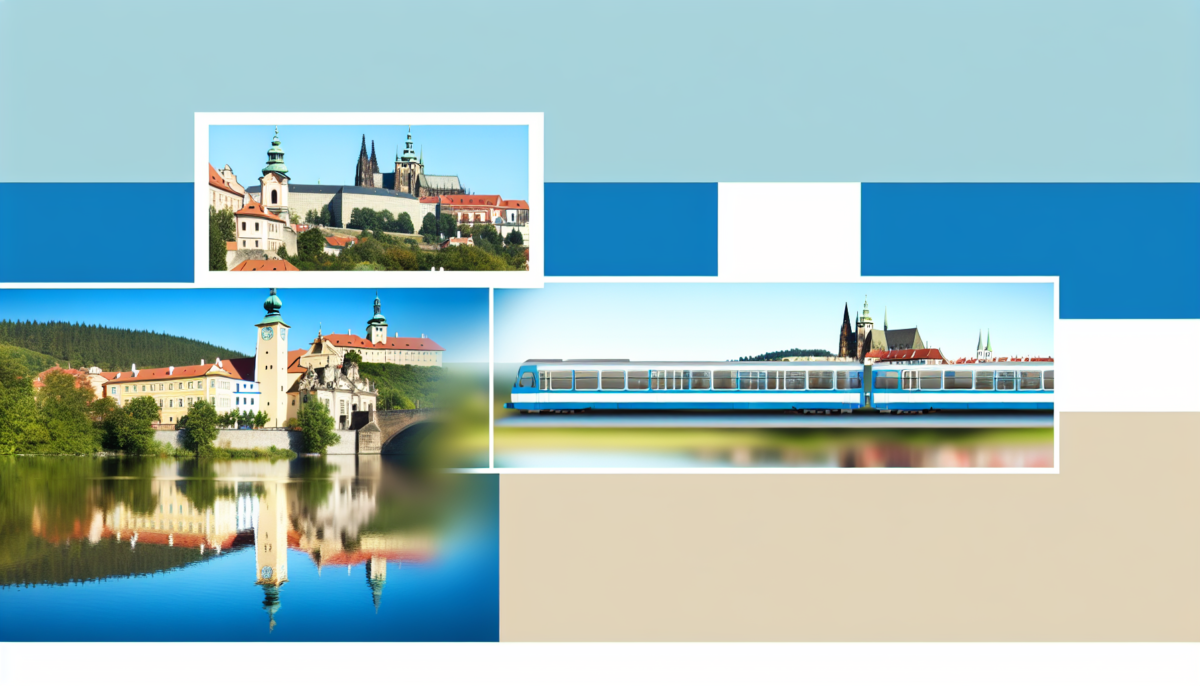
Prague Day Trips: 15 Best Excursions Within 2 Hours of the City
Prague’s Gothic spires and baroque architecture captivate millions of visitors annually, but the Czech Republic’s treasures extend far beyond the capital’s cobblestone streets. Within a two-hour radius of Prague lies a remarkably diverse collection of medieval castles, UNESCO World Heritage sites, picturesque spa towns, and natural wonders that offer compelling reasons to venture beyond the city limits.
Planning prague day trips transforms a standard city break into an immersive exploration of Czech culture, history, and landscapes. Whether you’re interested in excursions from Prague to fairy-tale castles perched on limestone cliffs, bone-decorated chapels that challenge conventional aesthetics, or charming villages where time seems suspended in the 18th century, the prague surrounding areas deliver experiences that complement and enhance your understanding of this Central European nation.
This comprehensive guide examines the 15 best day tours Prague travelers can undertake, complete with transportation logistics, estimated costs, and itinerary recommendations. From the silver-mining town of Kutná Hora from Prague to the sandstone formations of Bohemian Switzerland, each destination offers unique attractions accessible as comfortable day excursions. These carefully selected locations represent the optimal balance of historical significance, visual appeal, accessibility, and authentic Czech experiences that extend beyond tourist-focused Prague.
1. Kutná Hora: UNESCO Heritage and the Macabre Sedlec Ossuary
Kutná Hora stands as one of the most historically significant prague day trips, located approximately 80 kilometers east of the capital. This former silver-mining town rivaled Prague’s wealth during the 14th century and retains architectural masterpieces that earned UNESCO World Heritage status in 1995.
The primary attraction, the Sedlec Ossuary (Bone Church), contains artistic arrangements of approximately 40,000 human skeletons, including a chandelier incorporating every bone in the human body. This memento mori serves as both macabre fascination and profound meditation on mortality. The adjacent Cathedral of the Assumption of Our Lady represents Gothic architecture at its finest, with soaring vaults designed by Jan Blažej Santini.
The town center features St. Barbara’s Cathedral, a masterwork of Gothic design rivaling St. Vitus Cathedral in Prague. Its five-petaled rose vaults and mining-themed frescoes reflect Kutná Hora’s economic foundation. The Italian Court (Vlašský dvůr), originally the royal mint, offers exhibitions on medieval coin production and the town’s silver legacy.
Transportation logistics: Direct trains depart Prague’s Main Railway Station hourly (60-75 minutes, approximately 100 CZK). Alternatively, organized tours (800-1,200 CZK) include transportation and guided commentary. Budget 5-6 hours for a comprehensive visit covering the Ossuary, both cathedrals, and the town center. The compact historical district allows comfortable exploration on foot, though comfortable walking shoes are essential for cobblestone streets and cathedral stairs.
2. Karlštejn Castle: Gothic Fortress Above the Berounka Valley
Karlštejn Castle dominates a forested hillside 30 kilometers southwest of Prague, representing Czech Gothic architecture’s defensive and aesthetic pinnacles. Emperor Charles IV commissioned this fortress in 1348 to safeguard royal treasures and holy relics, including the coronation jewels of the Holy Roman Empire.
The castle’s strategic position atop limestone cliffs 72 meters above the Berounka River provided natural fortification enhanced by concentric walls and towers. The Great Tower houses the Chapel of the Holy Cross, featuring 129 panel paintings by Master Theodoric and 2,000 semi-precious stones embedded in gilded walls—a medieval treasury that required the most sophisticated security measures of its era.
Guided tours (mandatory for interior access) operate in multiple languages and explore the Imperial Palace, Marian Tower, and Great Tower. The 45-minute standard route covers representative chambers and explains the castle’s historical significance, while the 100-minute extended tour includes the Chapel of the Holy Cross (advance booking essential, limited daily capacity).
Transportation logistics: Regional trains from Prague’s Smíchovské nádraží station reach Karlštejn village in 40 minutes (approximately 60 CZK). The scenic 2-kilometer uphill walk from the station to castle entrance requires 25-30 minutes. Tour operators offer packages (900-1,500 CZK) combining transportation and admission. Visit weekday mornings for smaller crowds, as weekend afternoons attract significant tourist volumes. The surrounding Bohemian Karst region offers excellent hiking trails for those seeking extended outdoor activities.
3. České Krumlov: Bohemian Renaissance Gem
České Krumlov represents the archetypal Central European medieval town, its UNESCO-listed center appearing virtually unchanged since the 16th century. Located 180 kilometers south of Prague (technically approaching the two-hour threshold), this destination justifies the extended journey through extraordinary architectural preservation and atmospheric charm.
The Vltava River encircles the historical center in a dramatic horseshoe bend, above which rises the Krumlov Castle complex—the second-largest in the Czech Republic after Prague Castle. The castle’s baroque theater, one of only three preserved worldwide with original stage machinery and backdrops, offers specialized tours demonstrating 18th-century theatrical technology.
Wandering the old town’s labyrinthine lanes reveals Gothic, Renaissance, and baroque architecture, artisan shops, riverside restaurants, and viewpoints offering photographic perspectives of the red-roofed townscape. The Regional Museum, Egon Schiele Art Centrum, and numerous galleries provide cultural depth beyond architectural appreciation.
Transportation logistics: Student Agency/RegioJet buses provide direct service from Prague’s Na Knížecí station (approximately 3 hours, 180-220 CZK). While challenging as a day trip due to distance, early morning departure (7:00 AM) and evening return (8:00 PM) allows 6-7 hours of exploration. Organized tours (1,200-1,800 CZK) optimize time management but limit independent exploration. Consider overnight accommodation to experience the town’s evening atmosphere and reduce travel fatigue. The compact center allows thorough exploration on foot within 4-5 hours.
4. Terezín: Sobering Holocaust Memorial
Terezín (Theresienstadt) serves as both 18th-century military fortress and poignant Holocaust memorial, located 60 kilometers north of Prague. This former concentration camp and ghetto operated from 1941-1945, imprisoning approximately 150,000 Jews, of whom roughly 33,000 died on-site and 88,000 were transported to extermination camps.
The Small Fortress functioned as Gestapo prison and interrogation center, its cells, execution grounds, and exhibition spaces providing unflinching documentation of Nazi atrocities. The Ghetto Museum occupies the former school building, presenting artifacts, testimonies, and art created by imprisoned children and adults. The hidden synagogue, discovered in 2000, displays prayers inscribed on walls by desperate inmates.
This excursion from Prague demands emotional preparation and respectful comportment. The educational value proves immense for understanding Holocaust history beyond statistics, confronting the systematic dehumanization implemented by fascist ideology. Allow adequate processing time; rushing through memorial sites diminishes their impact and disrespects those commemorated.
Transportation logistics: Direct buses from Prague’s Holešovice station reach Terezín in 60 minutes (approximately 80 CZK). Entry to memorial sites costs 220 CZK for comprehensive tickets. Budget 4-5 hours for thoughtful examination of the Small Fortress, Ghetto Museum, and cemetery. Guided tours (available on-site or through Prague operators) provide essential historical context that self-guided visits may lack. Many visitors combine Terezín with Litoměřice, a charming town 5 kilometers away, to balance the day’s emotional weight.
5. Karlovy Vary: Bohemian Spa Town Elegance
Karlovy Vary (Carlsbad) exemplifies Central European spa culture, its belle époque architecture and thermal springs attracting wellness seekers since the 14th century. Located 130 kilometers west of Prague, this elegant town occupies a forested valley where the Teplá River meets the Ohře, surrounded by hills containing 13 main thermal springs.
The colonnaded promenades—Mill Colonnade, Market Colonnade, and Park Colonnade—allow visitors to sample mineral-rich waters from ornate spring fountains using traditional spa cups. Each spring possesses distinct mineral compositions and temperatures (30-72°C), purportedly offering therapeutic benefits for digestive, metabolic, and musculoskeletal conditions.
Beyond hydrotherapy, Karlovy Vary offers the Moser Glass Museum (showcasing Bohemian crystal craftsmanship), Diana Observation Tower (accessible via funicular, providing panoramic valley views), and numerous art nouveau cafés serving traditional spa wafers (oplatky). The town gained international recognition as a James Bond filming location (Casino Royale, 2006), with the Grandhotel Pupp serving as the Hotel Splendide exterior.
Transportation logistics: Regular buses from Prague’s Florenc station reach Karlovy Vary in approximately 2.25 hours (150-200 CZK). Trains require longer journey times (3+ hours) with connections. The compact center allows walking exploration, though the hilly terrain challenges mobility-limited visitors. Purchase a spa cup (50-150 CZK) from souvenir shops to sample spring waters hygienically. Budget 5-6 hours for spa sampling, architectural appreciation, and museum visits.
6. Konopiště Castle: Archduke Franz Ferdinand’s Country Estate
Konopiště Castle represents aristocratic lifestyle in the decades preceding World War I, having served as the principal residence of Archduke Franz Ferdinand, heir to the Austro-Hungarian throne whose assassination triggered the Great War. Located 45 kilometers southeast of Prague, this Gothic fortress underwent extensive Renaissance and baroque modifications before Franz Ferdinand’s 1887 acquisition.
The archduke transformed Konopiště into a modern estate featuring electricity, plumbing, elevator, and one of Europe’s finest hunting lodges. Tours reveal his extensive weapons collection (4,500+ items), hunting trophies documenting hundreds of thousands of kills, and family apartments providing intimate glimpses into royal domestic life.
The meticulously maintained English-style garden, rose garden (featuring 200+ varieties), and terraced Italian garden demonstrate landscape architecture principles. A small lake with artificial islands and the Chapel of St. George (containing royal family memorabilia) complete the estate’s attractions. The castle’s historical significance extends beyond architecture to include Franz Ferdinand’s progressive political views and his controversial marriage to Sophie, Duchess of Hohenberg.
Transportation logistics: Direct trains from Prague Main Station reach Benešov u Prahy in 50 minutes (approximately 70 CZK), followed by a 2.5-kilometer walk or local bus to the castle. Organized tours (800-1,200 CZK) eliminate transfer logistics. Three tour routes explore different castle sections; the comprehensive visit requires 2-3 hours plus garden time. Weekend afternoons experience high visitor volumes; weekday mornings offer more comfortable touring conditions.
7. Průhonice Park: Botanical Gardens and Château Grounds
Průhonice Park offers respite from architectural and historical intensity through 250 hectares of landscaped gardens, forest paths, and ornamental plantings. Located merely 15 kilometers southeast of Prague, this UNESCO-protected park represents Czech landscape architecture’s finest achievement, designed between 1885-1927 by Count Arnošt Emanuel Silva-Tarouca.
The park combines romantic English landscape principles with botanical diversity, featuring approximately 1,600 tree and shrub species. Spring displays of rhododendrons and azaleas (peak: May) create spectacular color corridors, while autumn foliage transforms the park into a golden wonderland. The baroque château (housing the Institute of Botany, closed to tourists) provides architectural focal points amid naturalistic plantings.
Marked trails wind through varied ecosystems, from formal gardens near the château to naturalistic woodland areas and meadows. The park’s network of ponds, streams, and bridges creates romantic vistas popular with photographers and families. This accessible day trip Prague option suits visitors seeking outdoor recreation, botanical interest, or peaceful walking environments.
Transportation logistics: Metro Line C to Opatov, then bus 363 reaches Průhonice in approximately 30 minutes (standard Prague public transport ticket, 32 CZK). Entry costs 100 CZK (reduced rates for seniors/students). The park’s size accommodates visits ranging from 2-hour highlights to full-day explorations. Bring picnic supplies, as on-site dining options are limited. Optimal visiting seasons include spring (May) for rhododendrons and autumn (October) for foliage colors.
8. Bohemian Switzerland National Park: Sandstone Gorges and Rock Formations
Bohemian Switzerland (České Švýcarsko) National Park protects 79 square kilometers of dramatic sandstone landscapes along the Czech-German border, 130 kilometers north of Prague. The park’s geological formations—carved by millennia of erosion—create narrow gorges, towering rock walls, and natural arches that inspired 19th-century romantic painters who named the region for its supposed resemblance to Swiss landscapes.
The iconic Pravčická brána represents Europe’s largest natural sandstone arch (26.5 meters wide, 16 meters high), accessible via moderate hiking trails from Hřensko village. The Kamenice Gorge boat tour navigates narrow canyon passages with 50-meter vertical walls—an unforgettable experience combining natural wonder with adventure. Viewpoints like Belvedere and Mariina vyhlídka offer panoramic perspectives across forested sandstone plateaus.
This excursion from Prague appeals to outdoor enthusiasts, photographers, and nature lovers seeking wilderness experiences. Trail networks accommodate various fitness levels, from easy riverside walks to challenging rock scrambles. The park’s biodiversity includes rare plant species adapted to sandstone habitats and protected bird populations.
Transportation logistics: Trains from Prague Main Station to Děčín (90 minutes, approximately 120 CZK), then local bus to Hřensko (30 minutes). Organized tours (1,200-1,800 CZK) include transportation, guided hiking, and gorge boat tour. Essential items include sturdy hiking footwear, weather-appropriate clothing, water, and snacks (limited facilities within the park). Budget full-day (8-10 hours) for comprehensive exploration including Pravčická brána and gorge tours. Summer weekends attract crowds; weekday visits offer more solitude.
9. Křivoklát Castle: Medieval Fortress in Protected Landscape
Křivoklát Castle ranks among Bohemia’s oldest and most significant royal residences, its origins dating to the 12th century. Located 55 kilometers west of Prague within the Křivoklátsko Protected Landscape Area, this Gothic fortress served Czech kings as hunting lodge and prison, its strategic position controlling trade routes through densely forested terrain.
The castle’s architectural evolution spans Gothic, Renaissance, and neo-Gothic periods, creating a complex that illustrates Czech castle development across seven centuries. The Great Hall features a remarkable ribbed vault and late Gothic paintings, while the castle chapel contains a 13th-century altar and royal gallery. The dungeon and torture chamber exhibition provides sobering insights into medieval justice systems, though some visitors find these displays disturbing.
The castle library houses 52,000 volumes, including rare manuscripts and incunabula (books printed before 1501), representing one of Central Europe’s significant castle libraries. The surrounding Křivoklátsko Protected Landscape Area, recognized as a UNESCO Biosphere Reserve, offers extensive hiking trails through pristine forests and river valleys.
Transportation logistics: Trains from Prague’s Smíchovské nádraží station reach Beroun (45 minutes, approximately 70 CZK), then local trains to Křivoklát village (30 minutes). The 2-kilometer uphill walk from station to castle requires 25-30 minutes. Guided tours (available in Czech and English) are mandatory for interior access; budget 90 minutes for comprehensive tours. The castle offers fewer amenities than major tourist sites; bring food and water for extended visits. Combined castle visit and forest hiking creates fulfilling full-day excursions.
10. Mělník: Hilltop Town and Czech Wine Region
Mělník occupies a strategic position at the confluence of the Vltava and Labe (Elbe) rivers, 35 kilometers north of Prague. This charming town combines Renaissance architecture, wine culture, and historical significance as a residence of Czech queens and dowagers. The château dominates the hilltop, offering panoramic views across the river confluence and surrounding vineyards.
The Mělník château wine cellars extend through three underground levels, housing oak barrels of Ludmila, Tramín, and other varieties cultivated on south-facing slopes since the 14th century. Guided tours explain Czech viticulture history and conclude with wine tastings featuring regional specialties. The château’s baroque and neo-Renaissance architecture frames a central courtyard, while the adjacent Church of Saints Peter and Paul contains an ossuary displaying bones arranged in decorative patterns.
The town square features Renaissance and baroque townhouses, cafés, and the town museum. Mělník’s wine festival (September) celebrates harvest season with traditional folk music, dance performances, and extensive wine sampling. This accessible day trip Prague option suits visitors interested in Czech wine culture, smaller-scale historical sites, and less-touristed destinations.
Transportation logistics: Regional buses from Prague’s Holešovice station reach Mělník in 50 minutes (approximately 60 CZK). The compact town center allows 3-4 hours of comfortable exploration including château tour, wine tasting, and town wandering. Wine tastings cost 200-400 CZK depending on selection. Designated drivers should plan accordingly; alternatively, organized wine tours (1,200-1,600 CZK) include transportation and eliminate driving concerns. Combine with nearby Kokořín Castle for extended day trips.
11. Lidice Memorial: World War II Atrocity Site
Lidice represents one of World War II’s most horrific atrocities, the complete destruction of a Czech village in Nazi reprisal for Reinhard Heydrich’s assassination. On June 10, 1942, Nazi forces murdered all 173 male residents, deported women to Ravensbrück concentration camp, and sent children to extermination camps or Germanization programs. The village was burned, demolished, and removed from maps—an act of collective punishment intended to terrorize occupied Czechoslovakia.
The memorial site combines the razed village location (marked by crosses indicating murdered men’s burial positions), museum documentation, and rose garden memorial honoring the 82 murdered children. The exhibition presents pre-war village life through photographs, artifacts, and testimonies, then documents the massacre and its aftermath. Post-war efforts rebuilt Lidice nearby, though the original site remains preserved as memorial landscape.
This somber excursion from Prague provides essential historical education about Nazi occupation, resistance movements, and civilian suffering during World War II. The site’s stark presentation—grassy fields where homes once stood—creates powerful emotional impact through absence and silence rather than architectural monumentality.
Transportation logistics: Buses from Prague’s Dejvická metro station reach Lidice in 30 minutes (approximately 50 CZK). The memorial site entry is free, though donations support maintenance and educational programs. Budget 2-3 hours for museum exhibition and memorial grounds. The emotional intensity requires processing time; many visitors find the experience profoundly moving. Lidice lies close to Kladno; combined visits accommodate half-day itineraries.
12. Kokořín Castle and Mácha Lake Region
Kokořín Castle emerges from forested sandstone formations 50 kilometers northeast of Prague, its romantic Gothic silhouette exemplifying Czech castle aesthetics. Originally constructed in the 14th century, the castle fell to ruin before early 20th-century restoration transformed it into one of Bohemia’s most photogenic fortresses. The surrounding Kokořínsko Protected Landscape Area features distinctive sandstone rock formations, forest trails, and natural arches.
Castle tours explore furnished chambers decorated in romantic historical style, the chapel, and defensive towers offering forest views. The relatively compact size allows 45-minute guided visits covering essential spaces. The true appeal extends beyond architecture to the landscape setting—hiking trails wind through bizarre rock formations called “rock cities,” where erosion created mushroom-shaped pillars, narrow passages, and hidden caves.
The nearby Mácha Lake (Máchovo jezero) provides summer swimming, boating, and beach activities. This glacial lake, largest in northern Bohemia, attracts Czech families seeking recreational opportunities. The combination of castle exploration, hiking, and water activities creates diverse day trip experiences appealing to varied interests.
Transportation logistics: No direct public transport serves Kokořín; bus connections through Mělník require 2+ hours. Rental car access (60-minute drive from Prague) provides optimal flexibility for exploring the region’s dispersed attractions. Organized tours (900-1,400 CZK) solve transportation challenges. Hiking in Kokořínsko requires proper footwear and trail maps (available at castle entrance). Budget 5-6 hours for castle visit, hiking, and potential Mácha Lake extension. Spring and autumn offer optimal conditions; summer weekends bring crowds to the lake area.
13. Plzeň: Pilsner Birthplace and Industrial Heritage
Plzeň (Pilsen) represents Czech industrial achievement and beer culture, located 90 kilometers southwest of Prague. This city of 170,000 inhabitants achieved fame as birthplace of pilsner-style lager, developed at the Pilsner Urquell Brewery in 1842. The brewery tour explores historical cellars extending 9 kilometers beneath the city, where beer ages in oak barrels under constant temperature conditions. The tour culminates with fresh unpasteurized pilsner drawn directly from barrels—a significantly different experience from commercially bottled versions.
Beyond beer, Plzeň offers the Gothic Cathedral of St. Bartholomew (featuring the Czech Republic’s tallest church tower at 102 meters), underground passages (14-kilometer network of medieval cellars and tunnels), and the Brewery Museum documenting Czech beer culture history. The Great Synagogue represents the world’s third-largest Jewish house of worship, its Moorish-Romanesque design accommodating 2,000 worshippers.
The Techmania Science Center, located in former Škoda Works industrial buildings, presents interactive exhibits on science, technology, and engineering. Plzeň’s designation as 2015 European Capital of Culture spurred renovation of cultural facilities and public spaces, creating a more visitor-friendly urban environment.
Transportation logistics: Regular trains from Prague Main Station reach Plzeň in 90 minutes (approximately 150 CZK). Student Agency buses offer alternative service with similar journey times. The brewery tour requires advance booking (online reservations recommended, particularly weekends and holidays). Budget 6-7 hours for brewery tour, cathedral visit, underground passages, and lunch. The compact city center allows comfortable walking exploration. Beer enthusiasts should note that brewery tours involve alcohol consumption; plan transportation accordingly.
14. Koněprusy Caves: Karst Formations and Prehistoric Finds
Koněprusy Caves constitute the Czech Republic’s largest accessible cave system, located 50 kilometers southwest of Prague in the Bohemian Karst Protected Landscape Area. These limestone caverns, formed over millions of years through water erosion, extend through three levels featuring stalactite and stalagmite formations, underground chambers, and paleontological significance.
The guided tour (approximately 50 minutes) covers 620 meters through illuminated passages, explaining cave formation processes, mineral deposits, and unique formations like the “Bear Hall” named for prehistoric cave bear remains discovered here. Archaeological excavations revealed evidence of prehistoric human occupation and medieval counterfeiting operations—criminals exploited the caves’ isolation to produce fake coins, leaving behind furnaces and tools.
The karst landscape surrounding the caves features distinctive limestone formations, sinkholes, and gorges. Hiking trails connect to nearby Karlštejn Castle (7 kilometers), allowing combined excursions for energetic visitors. The area’s geological diversity attracts speleology enthusiasts and geology students studying karst processes.
Transportation logistics: No direct public transport; buses to Beroun (50 minutes from Prague) followed by taxi or 7-kilometer walk. Rental car access (45-minute drive) provides easiest logistics. Organized tours (800-1,200 CZK) combine caves with Karlštejn Castle visits. Cave temperature remains constant 10°C year-round; bring warm clothing even during summer. The tour involves stairs and uneven surfaces; mobility-limited visitors should inquire about accessibility. Photography without flash is permitted. Budget 2-3 hours for cave tour and surface exploration. Combined with Karlštejn, creates full-day itineraries.
15. Sázava Monastery: Romanesque Architecture and River Valley Setting
Sázava Monastery occupies a peaceful riverside setting 40 kilometers southeast of Prague, its Romanesque and Gothic architecture reflecting over 1,000 years of religious history. Founded in 1032 by St. Procopius, this Benedictine monastery served as center of Slavonic liturgy before religious reforms mandated Latin. The monastery experienced cycles of prosperity, destruction, reconstruction, and secularization, currently functioning as museum and cultural venue.
The monastery complex features St. Procopius Basilica (Romanesque and early Gothic elements), chapter house, cloisters, and abbot’s residence. The basilica’s crypt contains St. Procopius’ tomb, a pilgrimage destination for centuries. Exhibitions document monastery history, medieval manuscript production, and religious life. The surrounding Sázava River valley offers hiking and cycling trails through forested landscapes and traditional Czech villages.
This lesser-known excursion from Prague attracts visitors seeking tranquility, architectural appreciation without tourist crowds, and outdoor recreation opportunities. The monastery’s historical significance in Czech Christianity and Slavonic culture provides educational value, while the riverside setting facilitates relaxation and nature connection.
Transportation logistics: Trains from Prague Main Station reach Sázava in 60 minutes (approximately 80 CZK). The monastery lies 2 kilometers from the station (30-minute walk or taxi). Limited public transport requires schedule planning for return journeys. Entry costs 80 CZK; guided tours available by arrangement. Budget 3-4 hours for monastery visit and riverside walking. The site operates reduced hours during winter; verify opening times before visiting. Combine with Konopiště Castle (25 kilometers distant) for extended day trips. The area’s cycling routes attract recreational cyclists; bike rentals available in Sázava village.
Conclusion: Maximizing Your Prague Day Trip Experiences
The prague surrounding areas offer extraordinary diversity within convenient traveling distance, transforming standard city breaks into comprehensive Czech cultural immersions. From UNESCO World Heritage sites like Kutná Hora and České Krumlov to natural wonders in Bohemian Switzerland and sobering historical sites like Terezín and Lidice, these day tours prague provide essential context for understanding Czech history, culture, and identity beyond the capital’s tourist-focused center.
Strategic planning optimizes these excursions: prioritize interests (architecture, nature, history, culture), consider transportation logistics and seasonal factors, and balance intensive sightseeing with relaxation. Weekday visits typically encounter fewer crowds than weekends, while spring and autumn offer optimal weather conditions without summer’s peak tourism pressures. Advance booking for popular sites like Sedlec Ossuary, Karlštejn Castle’s Great Tower tour, and Pilsner Urquell brewery ensures access and reduces waiting times.
Transportation choices—regional trains and buses versus organized tours versus rental cars—depend on budget, desired flexibility, and comfort with independent navigation. Public transport provides economical access to most destinations while organized tours eliminate logistics stress and include expert commentary. The combination of multiple sites in geographic proximity (Karlštejn and Koněprusy Caves; Křivoklát and Konopiště; Terezín and Litoměřice) creates enriching full-day itineraries.
These prague day trips ultimately reveal the Czech Republic’s remarkable concentration of historical, architectural, and natural treasures. Whether your interests tend toward medieval castles, modernist architecture, geological formations, or profound historical sites, the regions surrounding Prague deliver experiences that complement and enhance your Czech journey. Begin planning your excursions to discover why this small Central European nation captivates travelers seeking authentic cultural encounters beyond conventional tourist circuits.